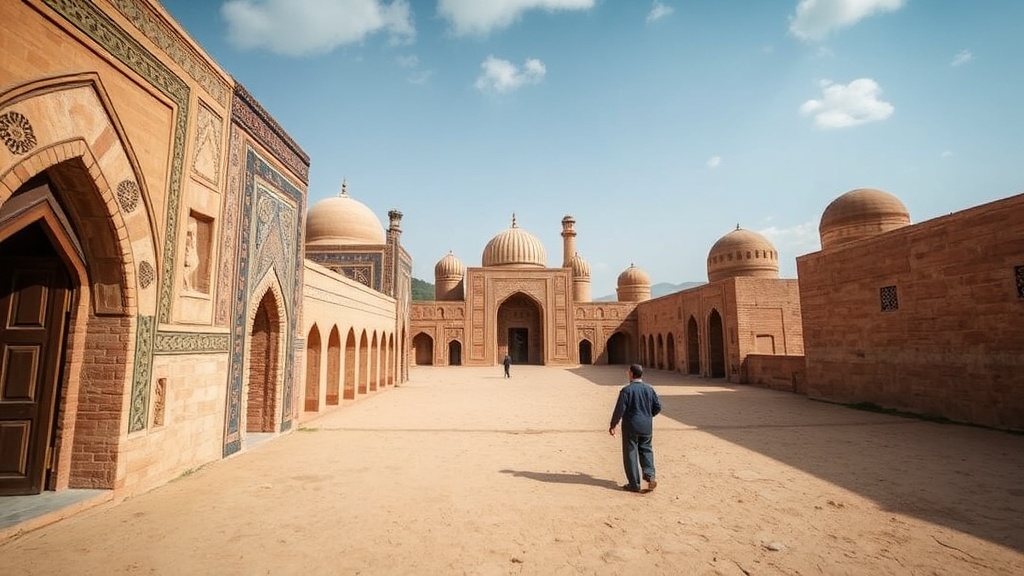
Whispers of the Silk Road: 4 Ancient Caravanserai to Experience in Uzbekistan

The Grandeur of Registan Square's Outskirts
Desert Sanctuary: The Forgotten Stops of Khiva
Bukhara's Trading Hubs and Stone Archways
The Nomadic Legacy in the Fergana Valley
This guide provides the logistical details, historical context, and architectural significance of four essential caravanserais in Uzbekistan to help you plan a culturally immersive journey through the Silk Road.
The Silk Road was never merely a collection of trade routes; it was a complex network of biological and economic exchange that relied on a specific architectural technology: the caravanserai. These fortified inns served as the vital organs of the desert, providing safety for merchants, livestock, and precious cargo against both the elements and bandits. For the modern traveler, visiting these sites offers more than a history lesson; it provides a masterclass in how human civilization adapted to harsh, arid environments through structural ingenuity.
1. The Ribat of Itchan Kala, Khiva
Located within the walled inner city of Khiva, the Ribat of Itchan Kala represents the quintessential defensive architecture of the Khorezm oasis. While many structures in Khiva have been meticulously restored, the Ribat stands as a testament to the sheer scale required to house large-scale merchant caravans. The structure is characterized by thick mud-brick walls and high, arched entryways designed to mitigate the intense heat of the Kyzylkum Desert.
What to Look For:
- The Portal Architecture: Observe the pishtaq—the monumental arched entrance. These were designed not just for aesthetics, but to create a psychological sense of security and grandeur for arriving travelers.
- Thermal Regulation: Note the thickness of the walls. The use of sun-dried clay bricks provides high thermal mass, keeping the interior spaces significantly cooler during the peak afternoon temperatures of the Uzbek summer.
- The Courtyard Layout: The central open courtyard served as a communal space for unloading goods and tending to camels. The layout is optimized for airflow, a crucial feature in the desert heat.
Traveler’s Tip: To experience the Ribat at its most profound, arrive at sunrise. The way the low-angle light hits the textured mud-brick surfaces highlights the geometric precision of the construction. If you are looking to practice finding stillness in the chaos of a busy Silk Road city, the quiet of the Ribat at dawn is the ideal setting.
2. The Caravanserai of the Registan, Samarkand
Samarkand is often cited as the jewel of the Silk Road, and its caravanserais are no exception. The structures surrounding the Registan Square and throughout the older quarters of the city were designed to facilitate the massive influx of traders bringing silk, spices, and ceramics. These sites are more sophisticated than the purely defensive outposts found in the desert, often incorporating intricate tilework and more complex social hierarchies within their layouts.
Structural Elements to Analyze:
- Mosaic and Majolica: Examine the blue-tiled mosaics. The use of cobalt and turquoise pigments was not just decorative; these colors were often associated with the sky and water, providing a visual respite from the dusty, ochre tones of the surrounding landscape.
- Multi-Level Functionality: Many of these structures featured two levels. The ground floor was dedicated to heavy storage and livestock, while the upper level offered more private, ventilated rooms for merchants and their families.
- Water Management: Look for the remnants of hauz (pools or basins). Water was the most precious commodity in Samarkand, and the integration of water features into the architectural design was essential for both survival and ritual purification.
Logistical Note: When visiting Samarkand, use the Afrosiyob high-speed train to move between major cities. It is the most efficient way to navigate the vast distances of Uzbekistan while preserving your energy for the intensive walking required to explore these architectural complexes.
3. The Bukhara Old City Caravanserais
Bukhara is a living museum, and its caravanserais are deeply integrated into the modern fabric of the city. Unlike the more isolated ruins found in the desert, the caravanserais here often transitioned into bazaars or shops. This evolution demonstrates the adaptability of these structures—how a space designed for camels and silk can transition into a space for modern commerce without losing its fundamental structural integrity.
Key Features of Bukhara's Trading Posts:
- The Dome Structure: Many of the trading domes (toqi) feature high, vaulted ceilings. This design is an engineering marvel that allows for natural ventilation and light through small apertures in the apex, reducing the need for artificial lighting and managing internal temperatures.
- The Centrality of the Bazaar: The way the caravanserais feed into the narrow, shaded streets of the old city creates a microclimate. The high walls and narrow alleys provide constant shade, a technique used for centuries to facilitate movement during the heat of the day.
- Materiality: Observe the transition from heavy stone foundations to lighter brickwork as the structures rise. This distribution of weight is essential for stability in an area prone to seismic activity.
Practical Advice: For those interested in the tactile history of the region, visit the Toqi Sarrofon (the Moneychangers' Dome). It provides a clear view of how the architectural volume of a caravanserai is utilized to create a sheltered, high-density trading environment.
4. The Desert Outposts of the Karakum Desert
While more difficult to access than the urban centers of Samarkand or Bukhara, the ruins of the desert caravanserais located near the fringes of the Karakum Desert offer the most raw and unfiltered look at the Silk Road's logistical backbone. These sites are often isolated, requiring significant planning and a rugged approach to travel.
What to Expect:
These are not "tourist sites" in the traditional sense. They are archaeological sites that demand respect and preparation. You will find heavily weathered walls, collapsed domes, and a profound sense of isolation. This is where the true scale of the Silk Road's environmental challenges becomes apparent.
Preparation Checklist:
- Transportation: A 4x4 vehicle is mandatory. The tracks leading to these remote outposts are often unpaved and subject to shifting sands.
- Navigation: GPS can be unreliable in these deep desert pockets. Carry physical maps and, if possible, hire a local guide from the nearest oasis town to ensure you can navigate the terrain.
- Supplies: Carry more water than you think you need. The evaporation rates in the Karakum are extreme. Just as one must respect the limits of the body when exploring remote maritime environments, you must respect the absolute necessity of hydration in the desert.
"The caravanserai was more than a stopover; it was a biological and cultural filter, a place where the world's disparate parts were forced into a shared, structured reality."
Conclusion: Understanding the Human Adaptation
To visit a caravanserai is to study the science of human adaptation. These structures were built to solve specific problems: how to store heat, how to manage water, how to defend a valuable asset, and how to facilitate movement across a hostile landscape. Whether you are standing in the bustling, tiled corridors of Samarkand or the silent, crumbling ruins of the Karakum, you are witnessing the physical manifestation of human resilience and the incredible ingenuity required to bridge the gaps between civilizations.