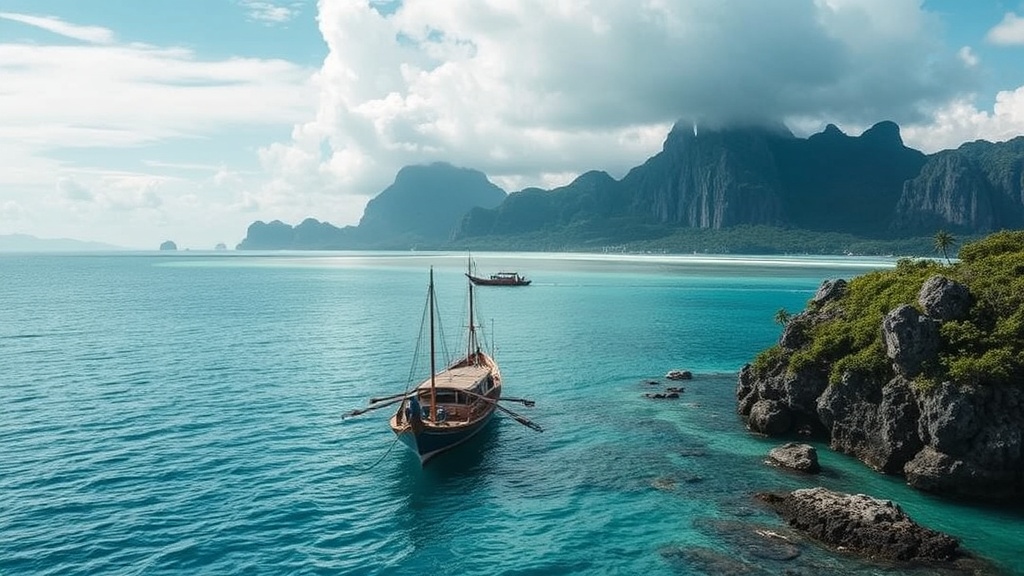
Beyond the Reef: Navigating the Remote Atolls of the Raja Ampat Archipelago

Most travelers assume that reaching the remote atolls of Raja Ampat requires a high-end luxury liveaboard. The prevailing wisdom suggests that if you aren't paying thousands of dollars for a boutique cruise, you are missing the true "heart" of the Dampier Strait or the Misool Marine Reserve. This is a fundamental misunderay of the region's logistics. While luxury vessels offer comfort, the most profound biological encounters and the most significant challenges in physiological adaptation occur when you are navigating the periphery via local wooden pinisi or small-scale island hopping. To truly experience the biodiversity of the Coral Triangle, you must move beyond the structured itineraries of commercial diving operations and understand the nuances of remote water management.
The Logistics of Remote Archipelago Navigation
Navigating the Raja Ampat archipelago is not a matter of following a single GPS track; it is a study in tidal currents and seasonal windows. The region is divided into several key zones, primarily the North (Dampier Strait) and the South (Misool). While the North is more accessible via Sorong, the South offers a higher degree of isolation and untouched reef structures. If you are planning a self-supported expedition, your primary tool is not just a map, but a deep understanding of the Molucca Sea current patterns.
Vessel Selection and Local Transport
If you are not on a liveaboard, you will likely rely on Longboats or traditional Pinisi vessels. When renting a local boat for day trips around the Wayag Islands, ensure the operator has a reliable outboard motor—preferably a Yamaha 40HP or higher—as the distance between islands can be significant and fuel stations are non-existent once you leave the main hubs. Always negotiate the return trip price upfront, as the lack of cellular service in the outer atolls means you cannot easily call for a pickup if a delay occurs.
- Fuel Management: Always carry an extra 20% of fuel capacity beyond your calculated trip distance. There are no refueling stations in the remote reaches of the Dampier Strait.
- Navigation Tools: Do not rely solely on smartphone GPS. The canopy of the tropical islands and the density of the atmosphere can occasionally interfere with signal. Carry a handheld Garmin GPSMAP or a physical waterproof chart.
- Tidal Windows: Most reef passages in Raja Ampat are only navigable during specific tidal windows. Plan your movements around the high tide to avoid grounding your vessel on the shallow limestone karst formations.
Physiological Adaptation to Pressure and Depth
For those engaging in breath-hold diving or deep technical diving in these waters, the environment presents a unique set of physiological challenges. The water temperature in Raja Ampat remains consistently warm, often between 28°C and 30°C, which affects thermoregulation and buoyancy. However, the real challenge lies in the depth and the pressure gradients found in the deep blue holes and steep drop-offs characteristic of the region.
Managing the Mammalian Dive Reflex
When diving in the remote atolls, you are often far from immediate medical assistance. This necessitates a rigorous approach to your Mammalian Dive Reflex (MDR). As you descend, the body undergoes peripheral vasoconstriction and bradycardia. In the deep channels of Misool, where you may encounter sudden thermoclines or rapid depth changes, you must be hyper-aware of your CO2 tolerance. Practicing CO2 Tables during your training phase is non-negotiable if you intend to explore the deeper reef walls safely.
One specific technique to master is the Mouthfill Method for equalization. In the deep, vertical walls of the Raja Ampat archipelago, standard Valsalva maneuvers often fail as the lungs compress. By storing a small volume of air in the oral cavity, you can maintain equalization at depths exceeding 30 meters without the high-stress effort that leads to oxygen consumption spikes. This is critical for maintaining the "Great Quiet"—that state of physiological calm required to navigate high-current environments.
"The ability to remain calm under pressure is not just a mental state; it is a biological requirement for efficient gas exchange and depth adaptation."
Equipment Essentials for Remote Tropical Environments
Standard gear often fails in the high-salinity, high-humidity environment of West Papua. Your equipment must be rugged, and your maintenance must be meticulous. If you are traveling light, every piece of gear must serve multiple purposes.
Technical Gear Recommendations
For freedivers and technical divers, the choice of a mask is vital. I recommend a low-volume mask like the Atomic Aquatics Subloop. A low-volume mask requires less air for equalization, which is a significant advantage when you are managing your oxygen stores in a high-current environment. For buoyancy control, a weight belt with a quick-release mechanism is essential, especially if you are navigating the unpredictable upswells common near the karst islands.
The Essential Kit:
- High-Quality Snorkel: A simple, J-shaped snorkel is often better than complex valve-based models which can clog with fine tropical silt.
- UV Protection: The equatorial sun is brutal. Use a high-SPF, reef-safe sunscreen like Stream2Sea to protect your skin without damaging the local coral ecosystems.
- Surface Marker Buoy (SMB): If you are diving in areas with strong currents, a high-visibility SMB is your lifeline. Ensure it is a 15-foot or longer version to stay visible above the surface chop.
Environmental Stewardship and Local Integration
The beauty of the Raja Ampat atolls is fragile. The limestone structures are highly susceptible to damage from anchors and improper buoyancy control. When navigating these waters, your presence should be as non-intrusive as possible. This extends to how you interact with the local communities in villages such as Arborek or Sawinggra.
When visiting these villages, it is respectful to ask for permission before photographing residents or their dwellings. Support the local economy by purchasing handmade crafts or utilizing local guides. A local guide does more than just show you the way; they possess an intuitive understanding of the local currents and the behavior of the marine life, which is an invaluable asset for any adventurer. Understanding the local way of life is much like understanding the sea: it requires patience, observation, and a willingness to listen to the subtle cues of the environment.
Whether you are navigating the deep blue holes or the shallow turquoise lagoons, the key to Raja Ampat is a combination of technical preparation and environmental respect. Do not simply visit the archipelago; learn to read its rhythms, from the movement of the tides to the subtle shifts in your own physiological response to the deep.