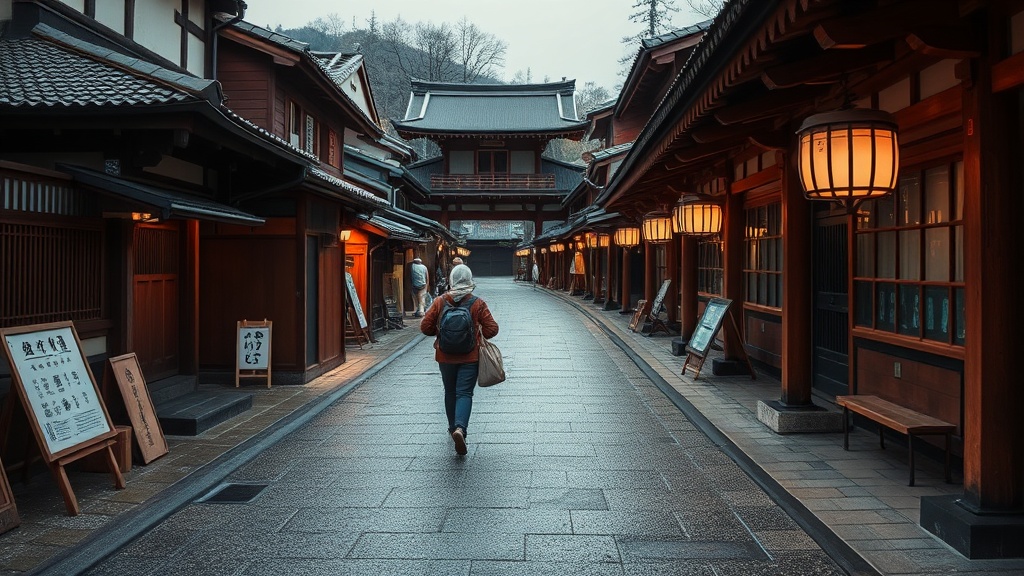
Finding Stillness in the Chaos: A Solo Traveler's Guide to Slow Travel in Kyoto

The humidity of a Kyoto afternoon clings to the skin like a second layer, but inside the wooden gates of Honen-in Temple, the air undergoes a physical shift. The sound of the city—the hum of the Kyoto bus lines and the distant rattle of the Keihan Electric Railway—is swallowed by the moss-covered embankments. There is no rush here. You are not checking a notification or racing to the next geotagged landmark. You are simply observing the way the light filters through the maple leaves. This is the fundamental difference between sightseeing and slow travel: the transition from a consumer of experiences to a witness of them.
The Mechanics of Slow Travel: Decelerating the Internal Clock
Slow travel is often misinterpreted as merely traveling for longer durations. In reality, it is a physiological recalment. Just as a freediver must regulate their heart rate through controlled breathing to manage oxygen consumption, a solo traveler must regulate their sensory input to avoid burnout. When you move too quickly through a destination, your nervous system remains in a state of high alert, constantly processing new stimuli, which leads to "travel fatigue."
To implement slow travel in a high-density cultural hub like Kyoto, you must apply a structured deceleration. Instead of a checklist of ten temples, select one primary focal point per day. This allows your brain to move past the superficial recognition of architecture and into the deeper observation of nuance, such as the specific texture of wabi-sabi—the beauty of imperfection—found in the weathered stone of a tsukubai water basin.
1. The Anchor Method: Establishing a Home Base
The biggest mistake solo travelers make is the "constant movement" trap. Moving hotels every two nights creates a cognitive load of packing, unpacking, and navigating new environments. To truly experience Kyoto, choose a single machiya (a traditional wooden townhouse) or a boutique hotel in a specific district like Gion or Higashiyama for at least five days.
- The Neighborhood Loop: Spend your first two days without a map. Walk from your accommodation to a local konbini (convenience store) or a small coffee shop using only your senses to navigate. This builds a mental map that feels intuitive rather than digital.
- The Ritual of the Morning: Find a local bakery or a small cafe, such as % Arabica near the river, and visit it at the same time each morning. The repetition of a small, predictable ritual grounds your nervous system in an unfamiliar environment.
- Logistical Minimalization: Carry a single, high-quality daypack (like a Bellroy or Patagonia pack) containing only the essentials: a reusable water bottle, a light layer, and a notebook. Reducing the physical weight you carry reduces the mental friction of movement.
2. Sensory Engagement: Reading the Environment
In my work teaching people to read their bodies under pressure, I emphasize the importance of "internal scanning." You can apply this to travel. Instead of looking at a temple through a smartphone lens, practice a sensory scan every hour.
When you arrive at a location like the Arashiyama Bamboo Grove, do not immediately start walking. Stand still for five minutes. Listen to the specific frequency of the bamboo stalks knocking against one another. Notice the scent of damp earth and cedar. This practice of shinrin-yoku (forest bathing) shifts your state from a frantic observer to an integrated part of the landscape. It is the difference between seeing a forest and feeling the weight of the air within it.
For those seeking even deeper immersion, consider the following sensory checkpoints:
- Auditory: Can you distinguish the sound of the wind in the pines from the sound of the water in the stone channels?
- Tactile: Notice the temperature difference between the shade of a temple eaves and the direct sunlight of the courtyard.
- Olfactory: Identify the scent of incense at Kennin-ji. Is it sandalwood, agarwood, or something sharper?
3. Curating the Itinerary: Quality Over Quantity
A high-density itinerary is the enemy of presence. A "fast" traveler tries to see the Golden Pavilion (Kinkaku-ji), the Fushimi Inari Shrine, and the Gion district in a single day. A "slow" traveler might spend the entire morning at Fushimi Inari, not just walking the main path, but hiking to the higher, less populated trails where the torii gates are weathered and the crowds thin out.
The "One Big Thing" Rule: Plan one significant activity per day. This might be a formal tea ceremony, a visit to a specific museum like the Kyoto National Museum, or a guided walk through the philosopher's path. Everything else—the meals, the walks, the rest—should be unstructured. This prevents the feeling of "missing out" and replaces it with the feeling of "being present."
"The goal is not to see everything, but to see one thing so deeply that it stays with you long after you have returned home."
4. Navigating the Solo Aspect: The Strength of Solitude
Traveling solo in Japan can feel intimidating due to the language barrier and the cultural emphasis on group dynamics. However, solitude is a tool for observation. When you are part of a group, your attention is divided between the group and the environment. When you are alone, your attention is singular.
Dining Solo: Do not fear the counter seating. Many of Kyoto's best ramen shops and small izakayas are designed for solo diners. Sitting at a counter in a place like Men-ya Inoichi allows you to watch the precision of the chefs—the way they handle the broth, the way they arrange the toppings. This is a form of performance art that is often missed when sitting at a table with companions.
Digital Minimalism: Use technology as a tool, not a crutch. Use Google Maps to find your way, but once you arrive at your destination, put the phone in your bag. If you are constantly looking at a screen to verify your location, you are not actually "there." If you find yourself needing to document everything for social media, stop. The most profound moments of travel are often the ones that are never captured on a sensor.
5. Practical Tools for the Slow Traveler
To facilitate this slower pace, certain physical tools can assist in maintaining your connection to the environment:
- Analog Journaling: Carry a small notebook (a Midori or Moleskine) and a high-quality pen. Writing down observations forces you to slow down your thought process and codify your experiences.
- Comfortable Footwear: You will be walking significantly more than you anticipate. Invest in footwear that supports long-duration movement, such as Hoka runners or high-quality leather boots, to ensure physical discomfort doesn't disrupt your mental state.
- Noise-Canceling Technology: While you want to hear the world, a pair of Sony WH-1000XM5 headphones can be vital during transit on the Shinkansen or local buses. They provide a "sensory reset" button, allowing you to create a controlled environment before entering a new, high-stimulus area.
By applying these principles, Kyoto ceases to be a series of photo opportunities and becomes a profound study in stillness. You learn that the "chaos" of travel is often a self-imposed construct, and that by slowing down, you can find the quietude that exists even in the heart of a bustling city. Whether you are navigating a mountain pass or a crowded subway station, the ability to find your center is the most valuable skill a traveler can possess.
Steps
- 1
Embrace the Early Morning Rhythm
- 2
Choose One Neighborhood per Day
- 3
Engage in Local Rituals
- 4
Digital Detox During Temple Visits