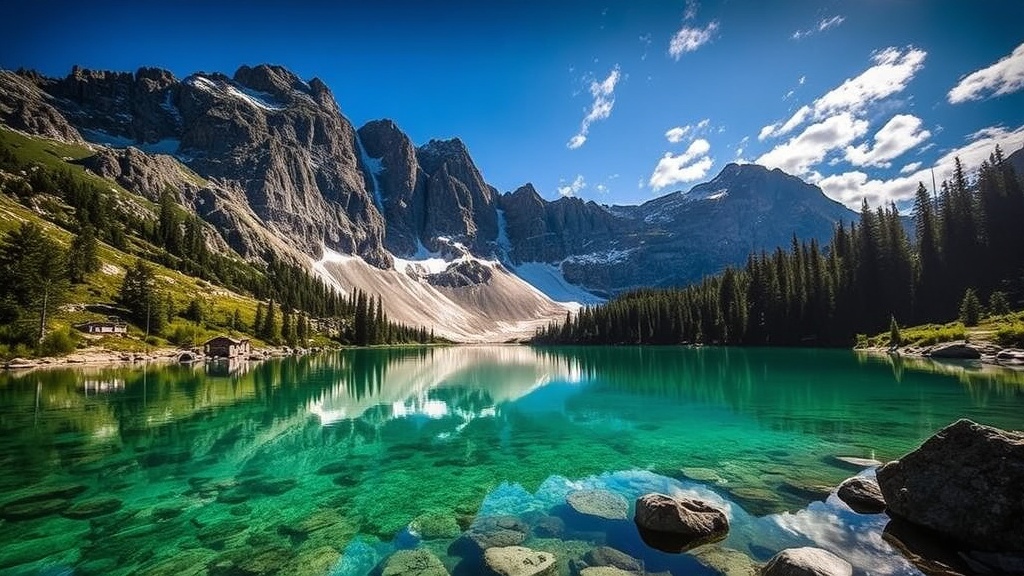
5 Secret Alpine Lagoons in the Dolomites You Must Visit

Lago di Braies: The Jewel of the North
Lago di Sorapis: The Milky Turquoise Dream
Lago di Carezza: The Rainbow of the Dolomites
Lago di Federa: A High Altitude Sanctuary
Lago di Landro: The Unspoiled Blue Mirror
There is a specific kind of silence that exists only at high altitudes. As a freediver, I spend much of my life chasing the "Great Quiet"—that weightless, pressurized stillness found beneath the surface of the ocean. But lately, I have been finding a different kind of stillness in the mountains. The Dolomites, a jagged limestone masterpiece in the Italian Alps, offer a unique physiological challenge. It isn't just the thin air or the steep gradients; it is the way the light hits the glacial lakes, creating a visual stillness that demands you slow your breath and simply be.
While many travelers flock to the well-trodden paths of Cortina d'Ampezzo, there is a more profound experience waiting in the periphery. If you look past the popular landmarks, you will find alpine lagoons that feel like the world's best-kept secrets. These are not just swimming holes; they are crystalline basins of turquoise and emerald, fed by melting snow and ancient geological shifts. For those of us who obsess over how the human body adapts to different environments—whether it is the pressure of the deep sea or the low oxygen of a high-altitude trek—these lakes offer a masterclass in environmental immersion.
In this guide, I am sharing five of the most breathtaking, lesser-known alpine lagoons in the Dolomites. These locations require a bit more effort to reach, a bit more grit to navigate, and a deep respect for the mountain's temperament, but the reward is a level of solitude that is increasingly rare in the modern world.
1. Lago di Sorapis: The Milky Turquoise Dream
If you have ever looked at a photo of a glacial lake and thought it looked "too perfect" to be real, you were likely looking at Lago di Sorapis. The color is a striking, opaque turquoise, a phenomenon caused by "glacial flour"—fine particles of rock silt suspended in the water that refract light in a way that defies description.
The Experience: Reaching Sorapis is not a casual stroll. It requires a moderate hike through dense forest and over rocky terrain. The trail is technical in parts, requiring steady footing and a clear head. As someone who spends a lot of time managing physical energy levels, I recommend timing your ascent to avoid the midday heat. Much like managing your energy during seasonal transitions, you must pace your breathing and movement to ensure you don't burn out before reaching the water.
- Difficulty: Moderate to High (due to technical trail sections).
- Best Time to Visit: Late June through September.
- Pro Tip: Bring a high-protein snack. The elevation gain can deplete your glycogen stores faster than you realize.
When you finally stand at the edge of the lake, the silence is heavy. The water is cold—extremely cold—and the sheer scale of the surrounding peaks makes you feel incredibly small. It is a humbling reminder of the Earth's geological power.
2. Lago di Braies (Pragser Wildsee) - The Hidden Side
I know what you are thinking: "Lago di Braies is the most famous lake in the Dolomites, not a secret." You are right. However, the "secret" isn't the lake itself; it is the way you approach it. Most tourists arrive at sunrise, fight for a parking spot, and spend their time dodging selfie sticks. To find the stillness I am talking about, you have to move beyond the wooden pier.
The Experience: Instead of lingering at the main dock, take the circuitous trail that loops around the perimeter. There are sections where the forest thickens and the sounds of the crowds fade into a dull hum. If you are willing to hike further toward the surrounding mountain passes, you can find vantage points where the lake looks like a mirror dropped into a stone bowl. It is a perfect place to practice mindful observation. If you find yourself feeling overwhelmed by the crowds, remember the importance of a mental and digital declutter to maintain your inner equilibrium.
- Difficulty: Easy (the loop is well-maintained).
- Best Time to Visit: Early morning (before 7:00 AM) or late afternoon.
- Pro Tip: Avoid the rental boat crowds. Instead, find a flat rock on the northern edge to sit and observe the light shifts.
3. Lago di Carezza (Karersee): The Rainbow of the Dolomites
Located at the foot of the Latemar mountain range, Lago di Carezza is often called the "Rainbow Lake." The water shifts from deep navy to bright emerald depending on the angle of the sun. It is a shallow, incredibly clear body of water that reveals every pebble on its floor, creating a sense of depth-perception illusion that can be quite striking to a trained eye.
The Experience: While the lake is easily accessible, the true magic happens when you look up. The sheer verticality of the Latemar peaks creates a sense of enclosure that is both protective and intimidating. This is a place for contemplation. When I am traveling, I often find that the best way to reconnect with my surroundings is through a ritual, much like how travelers learn essential morning rituals on the trail to ground themselves in a new environment.
- Difficulty: Very Easy (accessible via paved paths).
- Best Time to Visit: Late spring for the most vibrant colors.
- Pro Tip: The lake is a protected natural monument. Do not attempt to enter the water; the ecosystem is incredibly fragile.
4. Lago di Federa: The High-Altitude Sanctuary
For those who truly want to escape the modern world, Lago di Federa is the destination. Tucked away in the Civetta group, this lake is much higher than its neighbors and requires a significant trek to reach. This is not a place for the casual sightseer; it is a place for the adventurer.
The Experience: The hike to Federa is a test of endurance. You will be climbing through varying microclimates, moving from lush alpine meadows to stark, rocky slopes. As the air thins, you will feel the physiological shift—the slight tightening in your chest, the change in your breathing rhythm. This is where the science of human adaptation becomes personal. Much like navigating high-altitude village treks, you must respect the pace of the mountain. Do not rush the ascent. Let your body find its rhythm.
"The mountain does not move for you; you must learn to move with the mountain."
- Difficulty: Hard (requires significant elevation gain).
- Best Time to Visit: Mid-summer to avoid early snowmelt.
- Pro Tip: Pack an extra layer. Even in summer, the temperature drops drastically once the sun dips behind the peaks.
5. Lago di Landro: The Mirror of the Sexten Dolomites
Lago di Landro is often overlooked in favor of the more dramatic Lago di Misurina, but it offers a much more serene and unobstructed view of the Sexten Dolomites. The lake is long, narrow, and remarkably still, acting as a perfect mirror for the jagged peaks that surround it.
The Experience: This is a place of vast horizontal planes. While the other lakes feel enclosed by mountains, Landro feels open. It is an excellent spot for landscape photography or simply sitting in silence. The water is a deep, dark green, and the clarity is exceptional. If you are looking for a place to practice your breathwork—focusing on long, slow exhalations to calm the nervous system—this is it. It reminds me of the focus required when chasing the light in extreme environments; you have to be completely present in the moment to truly see what is happening.
- Difficulty: Easy (mostly flat terrain around the lake).
- Best Time to Visit: Late afternoon when the "Alpenglow" hits the peaks.
- Pro Tip: Bring a lightweight camping chair. The ground can be uneven, and you'll want to stay a while to watch the light change.
Essential Tips for Your Alpine Adventure
Traveling to the Dolomites is as much about mental preparation as it is about physical gear. Whether you are hiking to a remote lagoon or simply enjoying a scenic drive, keep these three principles in mind:
- Hydration and Electrolytes: High altitude and constant movement will dehydrate you faster than you realize. Don't just drink water; ensure you are replacing electrolytes to maintain cognitive function and muscle efficiency.
- Respect the Weather: Alpine weather is notoriously fickle. A sunny morning can turn into a thunderstorm by 2:00 PM. Always carry a high-quality waterproof shell, regardless of the forecast.
- Leave No Trace: These lagoons are pristine ecosystems. The "glacial flour" and delicate mineral compositions that make them beautiful are easily disrupted. Carry out everything you carry in.
The Dolomites are more than just a mountain range; they are a sanctuary for those seeking to reconnect with the primal rhythms of the earth. Whether you are looking for the turquoise brilliance of Sorapis or the quiet reflection of Landro, I hope these hidden gems provide the stillness you are searching for. Go slow, breathe deep, and let the mountains teach you how to be still.