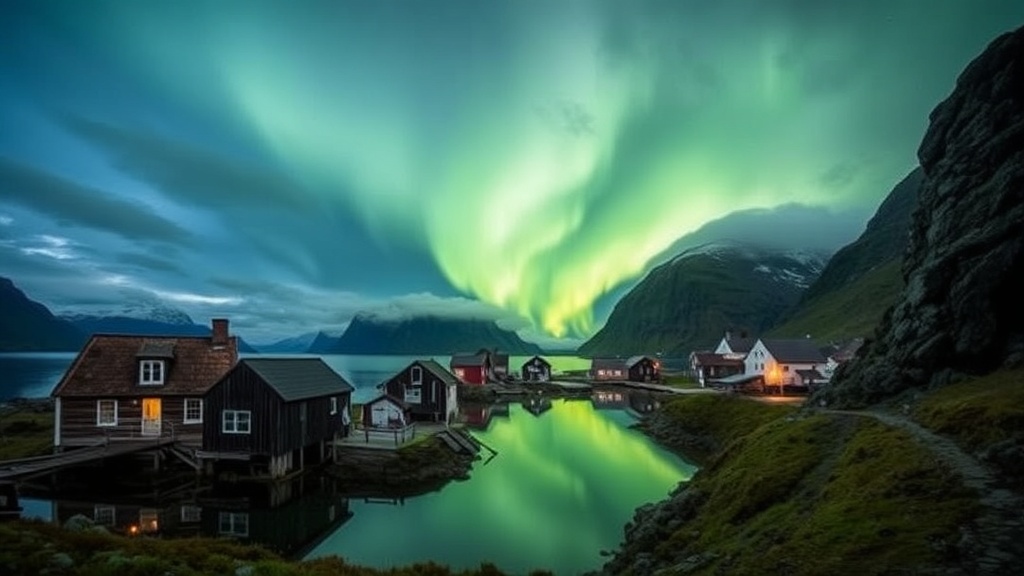
4 Remote Coastal Villages in Norway to Visit for Quietude

The Quiet Charm of Reine
Finding Stillness in Henningsvær
The Seclusion of Nusfjord
Exploring the Edge in Å
Finding true silence requires moving beyond the standard tourist circuits of the Lofoten Islands or the crowded streets of Bergen. For travelers seeking psychological stillness and a connection to the rhythmic movement of the ocean, Norway’s northern coastlines offer a specific type of isolation that is difficult to find in more accessible parts of Europe. This guide identifies four remote coastal villages where the primary sounds are the tide and the wind, providing the necessary environment for deep reflection and physical recalibration. These locations are selected specifically for their accessibility to water-based activities and their ability to facilitate a sense of profound solitude.
Reine, Lofoten Islands
While the Lofoten archipelago is increasingly popular, the village of Reine remains a bastion of quietude if you time your arrival correctly. Situated at the very end of the E10 highway, Reine is hemmed in by the jagged peaks of Reinebringen and the deep waters of the Reinefjorden. The geography here creates a natural sound barrier, dampening the noise of the mainland and leaving only the low-frequency hum of the Norwegian Sea. This is a prime location for those interested in the intersection of dramatic topography and maritime stillness.
To experience the most profound quietude in Reine, avoid the mid-summer peak when cruise ship traffic is highest. Instead, aim for the shoulder seasons of late September or early October. During this time, the light shifts to a lower angle, and the crowds dissipate, leaving the fjords largely empty. This is an ideal period for practicing breathwork or meditative observation of the water, as the atmospheric pressure changes often bring a heavy, stillness-inducing mist over the mountains.
Practical Logistics for Reine
- Transport: Access via the E10 highway. If driving a van or small camper, ensure your brakes are in top condition for the steep descents around the Reinefjorden.
- Accommodation: Look for traditional rorbu (fisherman's cabins) that have been converted into high-end rentals. These structures are built directly over the water, allowing you to hear the tide beneath your floorboards.
- Activity: The area is excellent for coastal hiking, but the weather can shift rapidly. Always carry a high-quality shell jacket and a topographic map, as GPS reliability can fluctuate in the deep fjords.
Henningsvær, Lofoten Archipelago
Henningsvær is often called the "Venice of the North," but it functions more like a secluded maritime outpost. Located on several small islands connected by bridges, the village is surrounded by the Vestfjord. The water here is a constant presence, and the layout of the village encourages a slower pace of movement. The isolation of Henningsvær is structural; the way the islands are dispersed creates pockets of absolute quiet that are shielded from the wind by the surrounding rock formations.
For those who use the ocean as a tool for mental clarity, the waters around Henningsvær offer a unique environment for observing the interplay between light and depth. The clarity of the water in the Vestfjord allows for high-visibility observation of the seabed, which is essential for anyone practicing mindful movement or underwater breath control. The stillness of the water in the sheltered bays provides a controlled environment for testing your physiological responses to temperature and pressure in a way that mimics the calm of a deep-sea descent.
Essential Gear for Henningsvær
Because the environment is defined by its maritime nature, your gear must account for high humidity and salt spray. If you are planning to spend time near the water for meditation or light swimming, a high-quality 5mm wetsuit is a non-negotiable requirement. The water temperatures remain low even in the summer, and maintaining core temperature is vital for any activity that requires focused breathing or physiological regulation.
Træna, Helgeland Coast
Moving further north and east from the Lofoten archipelago, the Træna archipelago offers a level of isolation that is significantly more intense. Træna is a collection of islands located in the Norwegian Sea, and it is a destination for those who want to disconnect from the modern world entirely. The village is defined by its relationship with the open ocean; there are no mountains here to block the wind, meaning the sensory experience is dominated by the vastness of the horizon and the relentless rhythm of the swells.
Træna is a destination for the serious adventurer. The lack of large-scale infrastructure means that you must be self-sufficient. This is a place to practice the discipline of minimalism. Much like packing light for long-distance travel, arriving in Træna requires a mindset of essentialism. You are not there for luxury; you are there for the raw, unadulterated experience of the North Atlantic. The solitude here is not just a lack of people, but a presence of scale—the scale of the ocean and the sky.
Navigating the Træna Archipelago
- Getting There: Access is primarily via ferry from Sandnessjøkka. Schedules are limited and must be planned weeks in advance.
- Connectivity: Cellular service is intermittent. This is a deliberate feature of the landscape, providing a forced digital detox.
- Environment: The weather is unpredictable and can be aggressive. Ensure your vehicle or base of operations is rated for high winds, as the islands offer little protection from the sea breeze.
Nyksund, Vesterålen
Nyksund is a village that has undergone a profound transformation. Once a declining fishing village, it has been reclaimed by artists and those seeking a different way of life. It sits on the edge of the Vesterålen archipelago, facing the open sea. The village is characterized by its rugged, weathered aesthetic—old wooden buildings, rusted metal, and the constant, salt-crusted air. It provides a sense of "broken" beauty that is incredibly grounding for those who find traditional scenery too polished.
The psychological benefit of Nyksund lies in its authenticity. There is no attempt to mask the harshness of the environment. For a traveler focused on human adaptation, Nyksund serves as a study in resilience. The way the local architecture and the people have adapted to the wind and the sea is a testament to the human ability to find equilibrium in extreme conditions. The silence here is heavy and textured, filled with the sounds of the elements rather than the hum of machinery.
Recommended Activities in Nyksund
The landscape around Nyksund is ideal for long-distance walking and coastal exploration. If you are looking to practice rhythmic movement—whether through hiking or simply walking the shoreline—the terrain is challenging but rewarding. The uneven, rocky paths require a high degree of proprioception and focus. This is an excellent place to practice "reading" your body’s fatigue levels and adjusting your pace to match the natural terrain, a skill highly relevant to finding the right rhythm for long-distance trekking.
A Note on Arctic Preparedness
Regardless of which of these four villages you choose, the fundamental rule of Norwegian coastal travel is preparation. The transition from a state of calm to a state of environmental stress can happen in minutes. Whether you are observing the tide or hiking a coastal ridge, always monitor your internal state. If you feel your breath shortening or your core temperature dropping, retreat to your shelter immediately. True quietude is only possible when you have first secured your physical safety and thermal stability.