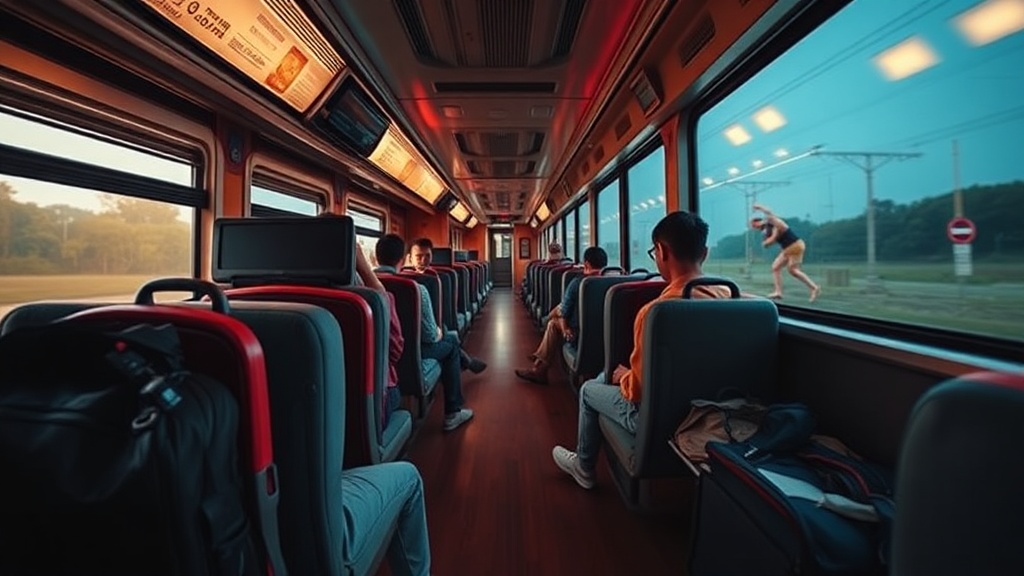
Packing Light for Long Distance Train Travel in Southeast Asia

The Myth of the Heavy Suitcase
Most travelers believe that being prepared for a multi-country journey through Southeast Asia requires a substantial amount of gear. They assume that a large, hard-shell suitcase is the safest way to protect their belongings during long-distance train travel. This is a misconception. In reality, heavy luggage is a liability on Southeast Asian rail networks. Whether you are boarding a sleeper train in Thailand or navigating the crowded platforms of the Reunification Express in Vietnam, weight and volume are your enemies. A heavy bag slows you down during station transfers, makes it nearly impossible to lift gear into overhead racks, and increases the risk of theft or damage in cramped compartments. To travel effectively, you must prioritize modularity, weight distribution, and durability over sheer volume.
Selecting Your Primary Vessel
For long-distance rail travel, your primary bag should be a high-quality, soft-sided backpack or a lightweight duffel rather than a rolling suitcase. Rolling luggage is notoriously difficult to manage on Southeast Asian train platforms, which are often uneven, unpaved, or filled with stairs. A backpack allows you to maintain three points of contact: two hands for balance and your feet for movement. If you are moving through high-density areas like Bangkok’s Hua Lamphong station, a backpack keeps your hands free to manage tickets or mobile payments.
The Backpack vs. The Duffel
If you choose a backpack, look for a technical model with a robust internal frame and a hip belt. A hip belt is non-negotiable; it transfers the weight from your shoulders to your pelvis, which is vital when you are walking long distances between train stations and hostels. A model like the Osprey Farpoint/Fairview 40L or the Gregory Baltoro provides the structure needed to keep your gear organized. If you prefer a duffel, ensure it has backpack straps. The Patagonia Black Hole Duffel is a standard for a reason—it is water-resistant and incredibly durable, which is essential when your bag is being tossed into a luggage rack or sitting on a dusty platform in Laos.
The Importance of a Daypack
Never travel with only one bag. You need a secondary, smaller pack (15L to 25L) for daily excursions and essential items. This daypack should hold your water, camera, power bank, and any lightweight layers. When you board a sleeper train, your large primary bag goes into the overhead rack or under the seat, while your daypack stays within arm's reach. This ensures that if you need to access your passport, medication, or a jacket during the night, you do not have to unpack your entire kit.
The Art of Modular Packing
Packing for a long-distance journey requires a system that prevents "digging." In the cramped confines of a train berth, you do not want to be pulling clothes out of a single large compartment. Use packing cubes to categorize your gear by function. This method is not just about organization; it is about managing the physics of your bag. By compressing your clothes into cubes, you eliminate dead air and prevent the weight from shifting mid-transit.
- The Clothing Cube: Use one medium cube for base layers and one for heavier items like linen shirts or light trousers.
- The Tech Pouch: Dedicate a small, padded pouch for cables, chargers, and power banks. In Southeast Asia, voltage can fluctuate, so include a high-quality universal adapter like the Zendari or OneAdaptr.
- The Hygiene Kit: Use a waterproof toiletry bag. This is crucial because many train bathrooms are minimal, and you may need to wash your face or hands in a sink where splashes are common.
When selecting clothing, focus on high-performance, quick-dry fabrics. Cotton is heavy, retains moisture, and takes a long time to dry in the humid climates of Vietnam or Indonesia. Opt for merino wool blends or synthetic technical fabrics that can be washed in a hostel sink and dried overnight. This allows you to pack significantly less while maintaining a high level of comfort.
Essential Gear for the Rails
Long-distance train travel in Southeast Asia can be an exercise in sensory management. The environments are often loud, crowded, and physically demanding. To maintain your equilibrium and focus, you need specific tools designed for these conditions.
Noise and Sleep Management
Sleeper trains are rarely silent. You will encounter snoring, heavy breathing, and the constant mechanical rhythm of the tracks. A pair of high-quality noise-canceling headphones or high-decibel earplugs is essential. I recommend Loop Quiet earplugs for sleeping; they are low-profile and won't fall out if you move in your sleep. Additionally, a lightweight silk eye mask is vital for blocking out the light from the corridor or the morning sun, allowing you to maintain a sleep cycle regardless of the time of day.
Power and Connectivity
While many modern trains in Thailand and Malaysia offer power outlets, they are often unreliable or located in inconvenient spots. Always carry a high-capacity power bank (at least 10,000mAh), such as an Anker PowerCore. This ensures your phone remains charged for navigation and digital tickets. If you are traveling through more remote areas, a multi-port wall charger is more efficient than carrying multiple individual plugs.
Security and Organization
Security is a practical concern during long-haul journeys. Use a combination of a TSA-approved padlock and a small, lightweight cable lock. You can use the cable lock to secure your backpack to the metal frame of your bunk or the seat below you. This prevents opportunistic theft during the night. For your most valuable items—passports, credit cards, and emergency cash—use a dedicated money belt or a highly secure internal pocket within your daypack. Never keep your primary wallet in your outer backpack pockets while moving through crowded stations like Hanoi Railway Station.
Weight Distribution and Physical Readiness
As someone who spends a significant amount of time monitoring how the body reacts to external pressures, I cannot overstate the importance of weight distribution. A poorly packed bag creates uneven tension on your musculoskeletal system. When you are walking through a train station with a 12kg bag, that weight should be centered close to your spine. If the weight is too far from your back, it pulls your center of gravity backward, causing fatigue in your lower back and neck.
Before you depart, perform a "test walk." Pack your bag exactly as you intend to travel and walk for at least 30 minutes. If you feel a pinch in your shoulders or a strain in your hips, you need to redistribute the weight. Heavy items, like your tech kit and water, should be placed in the middle of the pack, closest to your back. Lighter items, like your spare clothes, should be at the bottom or the very top. This creates a stable load that moves with your body rather than against it.
The Minimalist Mindset
The most effective tool you can carry is a disciplined mindset. Every item in your bag should pass a strict utility test: Does this item serve more than one purpose? Can I function without it for 48 hours? If you are traveling through diverse landscapes—from the humid jungles of Northern Thailand to the cooler highlands of Sapa—do not pack for every possible temperature. Instead, pack a versatile base layer and one high-quality outer shell that can handle both wind and rain.
By reducing your physical load, you increase your mental capacity to observe and experience your surroundings. Whether you are navigating the logistics of a cross-country journey or simply trying to find a moment of stillness in a crowded carriage, traveling light is the foundation of a successful adventure. You are not just moving gear; you are managing your energy and your ability to adapt to the world around you.