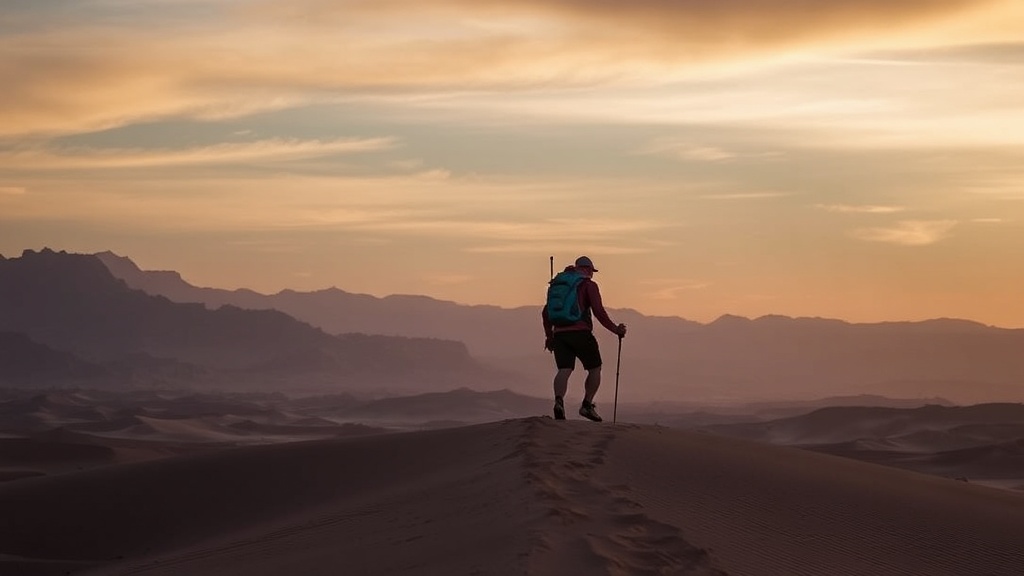
Finding the Right Rhythm for Long Distance Desert Trekking

Understanding the Mechanics of Desert Movement
This guide provides a technical framework for establishing a sustainable movement rhythm during long-distance desert trekking. You will learn how to manage thermoregulation, monitor physiological signals of heat stress, and implement pacing strategies that prevent systemic fatigue. Success in arid environments depends less on sheer willpower and more on the precise calibration of your output to your environmental constraints.
The Physiology of Pacing in Arid Environments
Desert trekking requires a fundamental shift in how you perceive exertion. Unlike mountain trekking, where the primary variable is vertical gain, desert trekking is dominated by thermal load and metabolic heat production. In a high-heat environment, your body is fighting two battles: moving your weight across shifting terrain and cooling itself through evaporation. If your movement pace exceeds your body's ability to dissipate heat, you will hit a physiological wall that no amount of electrolytes can fix.
The Low-Intensity Steady State (LISS) Approach
For long-distance desert travel, aim for a Low-Intensity Steady State (LISS) movement pattern. This means maintaining a pace where your breathing remains rhythmic and controlled—specifically, you should be able to breathe exclusively through your nose for extended periods. If you are forced to mouth-breathe to satisfy an oxygen debt, you are moving too fast and increasing your core temperature too rapidly.
A successful rhythm is one that feels "boringly consistent." If you find yourself surging forward during easy stretches of sand, you are burning through glycogen stores that you will need six hours later. Use a cadence-based approach rather than a speed-based one. Instead of looking at your GPS for miles per hour, focus on a steady number of steps per minute to maintain a predictable metabolic output.
Managing Thermal Load and Hydration Rhythms
Hydration is not a reactive process; it is a proactive management system. Waiting until you feel thirst is a sign that you are already in a state of mild dehydration, which impairs cognitive function and decision-making—two things you cannot afford when navigating remote desert stretches.
The Pre-emptive Hydration Protocol
Establish a strict "sip-and-salt" schedule. Rather than drinking a liter of water every two hours, which can cause gastric distress and sloshing, aim for small, frequent doses of 150ml to 200ml every 20 minutes. This ensures a steady absorption rate in the small intestine. To maintain electrolyte balance, do not rely on plain water alone. Use high-quality electrolyte concentrates like LMNT or Liquid I.V., which provide the necessary sodium, potassium, and magnesium to facilitate cellular hydration. In extreme heat, your sodium loss can be significant, and replacing it is critical to preventing hyponatremia.
Thermoregulation Through Clothing and Shade
Your rhythm is heavily influenced by your ability to stay cool. Use the "layering for heat" principle. A lightweight, long-sleeved technical shirt made of UPF 50+ rated fabric (such as those from Patagonia or Outdoor Research) protects your skin from direct solar radiation. Direct sun on skin increases the thermal load significantly more than filtered light.
When the sun reaches its zenith—typically between 11:00 AM and 3:00 PM—your rhythm should shift to a "rest and recover" phase. This is not a time for movement, but for shade management. If your route does not offer natural shade, you must carry a lightweight, portable shelter, such as a SilNylon tarp, to create a microclimate during these peak hours. This is a similar principle to managing breath and altitude, where you must respect the environmental ceiling to avoid total systemic failure.
Navigating Terrain: Sand, Scree, and Soft Surfaces
The surface beneath your feet dictates the energy cost of every step. In the desert, you will likely encounter soft sand dunes, hard-packed clay, and loose scree. Each requires a different mechanical approach to maintain your rhythm.
The Sand Technique
Walking through soft sand is an incredibly high-energy activity because the surface absorbs your downward force, making every step feel like you are climbing a steep grade. To maintain a rhythm in sand:
- Keep your steps shallow: Do not attempt to lift your feet high; this wastes energy.
- Use a mid-foot strike: Heel striking in sand causes you to sink deeper and lose momentum.
- Maintain momentum: Avoid stopping frequently. Once you lose momentum in sand, the energy required to restart is significantly higher.
Footwear and Weight Distribution
Your footwear must provide stability without adding unnecessary weight. A mid-height boot like the Salomon Quest offers ankle support for uneven terrain, but for pure sand navigation, a lighter, high-traction trail shoe may prevent fatigue. Ensure your pack is balanced; a top-heavy load will cause your gait to become erratic on uneven desert surfaces, forcing your stabilizer muscles to work harder and increasing your heart rate.
Monitoring Biological Feedback Loops
To maintain a long-distance rhythm, you must become an expert at reading your own internal telemetry. You cannot rely solely on a smartwatch; you must listen to the subtle shifts in your physiology.
The "Check-In" System
Every hour, perform a three-point internal scan:
- Cognitive Check: Are you able to perform simple mental math or recall a recent thought easily? If you feel "foggy," your hydration or salt levels are likely dropping.
- Heart Rate Variability: Is your heart rate staying within your target zone, or is it creeping upward even though your pace hasn't changed? An upward drift in heart rate during steady exertion is a precursor to heat exhaustion.
- Digestion Check: Is your stomach feeling heavy or nauseous? This is often a sign of blood being diverted away from the digestive system to the skin for cooling, indicating you are pushing too hard.
Recognizing Heat Stress Thresholds
You must be able to distinguish between "discomfort" and "danger." Discomfort is a standard part of trekking; danger is a physiological red flag.
- Mild Heat Exhaustion: Excessive sweating, headache, and dizziness. Action: Immediate shade, increased electrolyte intake, and a reduction in pace.
- Severe Heat Stroke: Absence of sweating (despite heat), confusion, or rapid pulse. Action: This is a medical emergency. Stop movement immediately, use water to cool the skin, and seek rescue.
The Importance of the "Slow Start"
A common mistake in desert trekking is the "early burst." Many trekkers start with high energy in the cool morning hours and burn through their capacity too early. To build a sustainable rhythm, treat your first four hours as a calibration period. Do not test your speed. Instead, focus on the sensation of your feet hitting the ground and the rhythm of your breath. By the time the temperature begins to rise in the late morning, your body should already be in a steady, efficient groove.
The goal of desert trekking is not to conquer the landscape, but to move through it with as little friction as possible. By treating your movement as a technical discipline—focusing on metabolic efficiency, thermal management, and constant biological monitoring—you can endure much longer distances than those who rely on brute force alone.
Steps
- 1
Establish a Baseline Pace
- 2
Monitor Hydration and Electrolytes
- 3
Utilize the Early Morning Window
- 4
Listen to Your Body's Fatigue Signals