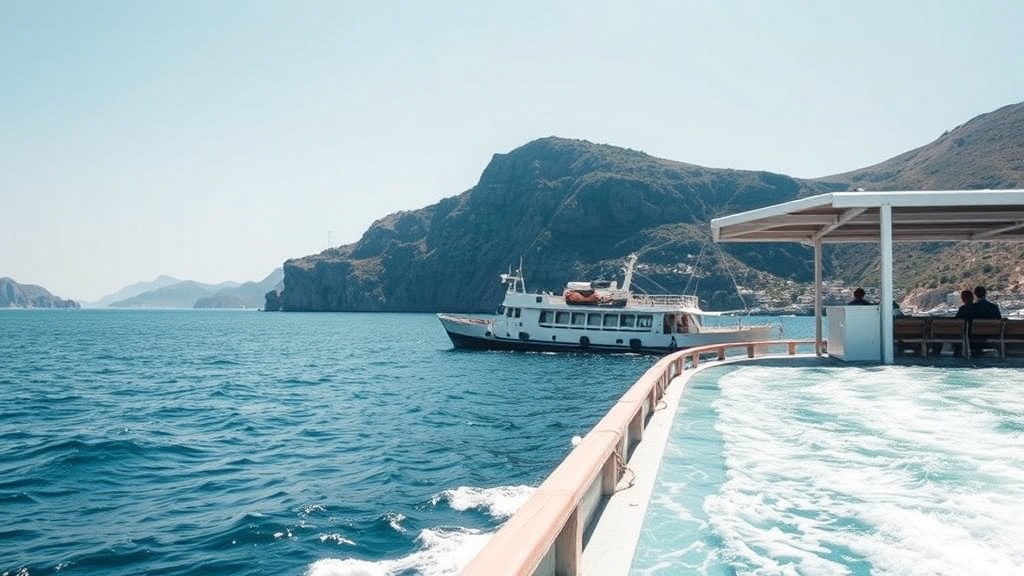
Why You Should Embrace the Slow Ferry Life in the Greek Islands

Over 70% of travelers report feeling "travel burnout" by the second week of a multi-destination trip, often caused by the friction of high-speed transit. While many tourists attempt to see as many Greek islands as possible by booking short-haul flights or high-speed catamarans, this approach often results in a superficial experience that misses the physiological and mental benefits of rhythmic travel. This post outlines why choosing the slower, traditional ferry system in the Aegean and Ionian seas is a superior method for deep travel, focusing on the logistical advantages, the physiological impact of sea rhythms, and how to optimize your transit for maximum recovery.
The Logistics of the Greek Ferry System
The Greek ferry network is one of the most complex maritime infrastructures in the world, divided primarily between the Aegean Sea (east) and the Ionian Sea (west). To navigate this effectively, you must understand the distinction between high-speed catamarans and conventional large-vessel ferries. High-speed vessels, such as those operated by Seajets, are significantly faster but often more expensive and prone to cancellations during periods of high wind, particularly the Meltemi winds in the summer.
Conventional ferries, like those operated by Blue Star Ferries, are much larger, slower, and more stable. While a high-speed boat might get you from Piraeus to Santorini in under five hours, a conventional ferry might take seven or eight. However, the larger displacement of these vessels makes them far more resilient to rough seas. For travelers carrying heavy gear—such as dive computers, wetsuits, or camping equipment—the stability of a large ferry is a critical factor in preventing motion sickness and gear fatigue.
Booking and Planning Essentials
To avoid the common pitfalls of maritime travel, follow these specific booking protocols:
- Use Centralized Aggregators: Use platforms like Ferryhopper to compare routes and timings in real-time. Do not rely on individual ferry company websites alone, as schedules can change due to weather.
- Book Deck vs. Cabin: If traveling on a long-haul route (e.g., Athens to Crete), book a cabin. If you are on a budget, book a "deck seat" or a "club seat" for more ergonomic support.
- Check the Vessel Type: Before booking, verify if the vessel is a high-speed catamaran or a conventional ferry. This determines your luggage allowance and your tolerance for sea swell.
- Arrive Early: For large departures from Piraeus or Rafina, arrive at the port at least 45 minutes before departure. The boarding process for vehicle-carrying ferries is significantly slower than for passenger-only boats.
The Physiological Benefits of Rhythmic Transit
As a freediving instructor, I view travel through the lens of human adaptation. Much like the descent into a deep dive, the transition from the high-intensity environment of a major city to the isolated rhythm of an island requires a period of physiological recalibration. High-speed travel keeps the nervous system in a state of "high alert," whereas the slow ferry provides a necessary buffer for the parasympathetic nervous system to engage.
The constant, low-frequency vibration of a large diesel engine and the rhythmic movement of the swell act as a form of sensory regulation. This is similar to the way we use rhythmic breathing to lower heart rates during breath-hold training. When you are on a slow ferry for six hours, your body begins to sync with the movement of the water. This period of "forced stillness" allows the cortisol levels accumulated from navigating airports and crowded streets to drop, preparing you for the quietude of your destination.
This transition is essential if your goal is to visit more remote locations. Much like finding solitude on remote islands, the ferry ride is not a gap in your journey; it is a functional part of your acclimatization process. It bridges the gap between the frantic energy of mainland Europe and the slow-motion lifestyle of the Cyclades or the Dodecanese.
Optimizing Your Onboard Experience
To make the most of a long transit, you must treat the ferry as a mobile base rather than just a vehicle. This requires specific gear and a mindset of preparation.
Managing Motion and Equilibrium
Even on large vessels, the sea can be unpredictable. To maintain your equilibrium and prevent nausea, focus on your visual horizon. If you are feeling unwell, do not look at a digital screen or read a book; instead, find a fixed point on the horizon or look at the stable structure of the ship's interior. Using Dramamine or Ginger chews can provide a chemical or natural buffer, but the most effective method is to stay in the center of the ship, where the pitch and roll are least perceptible.
Essential Gear for Long-Haul Ferries
Do not rely on the amenities provided by the ferry, as they are often basic and can be crowded. Pack a dedicated "transit kit" containing the following:
- Noise-Canceling Headphones: Essential for blocking out the constant drone of the engine and the noise of crowds in the common areas.
- Portable Power Bank: While many ferries have USB ports, they are often unreliable or located in hard-to-reach areas. A high-capacity power bank (e.g., Anker PowerCore) ensures your navigation tools remain charged.
- Layered Clothing: The temperature differential between the sun-drenched deck and the air-conditioned interior lounges can be extreme. A lightweight merino wool layer is ideal for temperature regulation.
- Hydration Strategy: Dehydration exacerbates motion sickness. Carry a reusable water bottle and aim to consume more water than you think you need, especially if you are consuming caffeine or alcohol on board.
The Value of the "In-Between" Time
The most significant mistake travelers make is viewing the ferry ride as "lost time." In reality, this is the most productive time for mental decompression. When you are moving between islands, you are effectively in a state of transit that mirrors the descent phase of a dive—a period of controlled, rhythmic movement that prepares the body for a new environment.
Use this time for tasks that require deep focus or deep rest. This is an ideal window for journaling, planning your next trek, or practicing mindfulness techniques. By embracing the slow ferry life, you are not just moving from Point A to Point B; you are actively practicing the art of slowing down. This mental shift is vital for anyone who seeks to travel with purpose and depth, rather than just checking off locations on a map.
Whether you are heading toward the rugged landscapes of the Ionian or the white-washed cliffs of the Aegean, respect the sea's pace. The ferry is your training ground for the stillness that follows. By choosing the slower route, you ensure that when you finally step onto the dock, you are not just arriving—you are truly present.