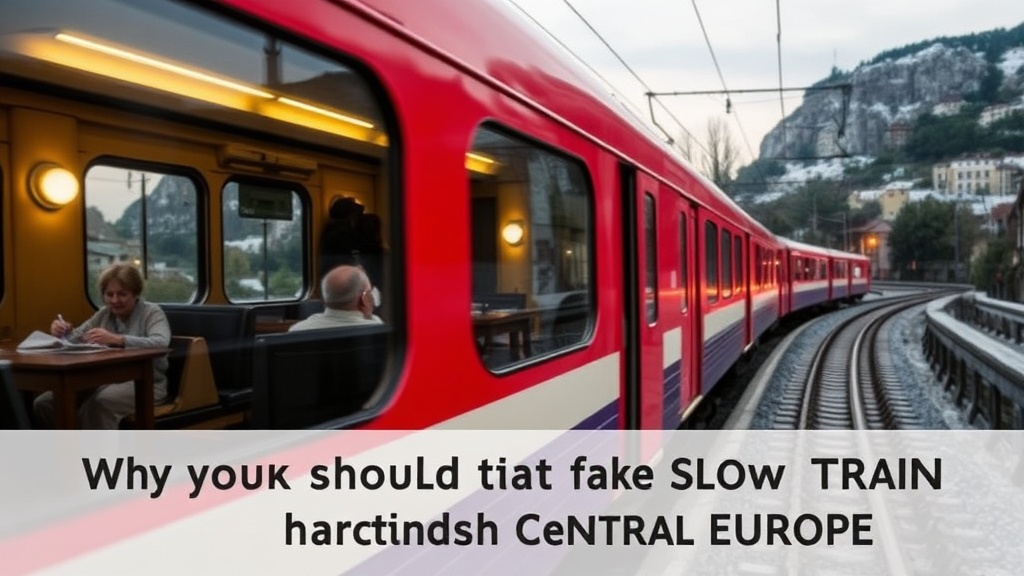
Why You Should Take a Slow Train Through Central Europe

A traveler stands on a crowded platform in Munich, clutching a heavy backpack and a printed ticket, watching the minutes tick away on a digital display. A delay in the connection means a missed bus in Salzburg, which in turn threatens a pre-booked tour in Ljubljana. This stress is the byproduct of high-speed, high-frequency travel, where the goal is often the destination rather than the movement itself. This guide explains why choosing the slow train through Central Europe—specifically through the corridors of Germany, Austria, Czechia, and Hungary—offers a superior way to observe the world, manage your energy, and experience the landscape with the same intentionality required in deep-sea exploration.
The physiological benefits of rhythmic movement
Traveling via high-speed rail or budget airlines often involves jarring transitions: the sudden acceleration of a plane, the abrupt deceleration of a car, or the frantic pace of an airport terminal. These shifts can trigger a subtle sympathetic nervous system response—a mild "fight or flight" state. In contrast, the steady, rhythmic motion of a standard EuroCity (EC) or regional train provides a predictable sensory input. This constant, low-frequency vibration and steady velocity allow the body to settle into a parasympathetic state, making it easier to rest or focus.
When you travel through the Alps or the Bohemian Forest via a regional train, the scenery does not flash by in a blur. Instead, the landscape unfolds in a continuous, cinematic progression. This gradual change in visual stimuli prevents the cognitive fatigue often associated with "fast travel." For those used to the intense focus required for breath-work or navigating technical environments, this rhythmic stability acts as a moving meditation, allowing you to observe the subtle shifts in topography and light without the sensory overload of high-speed transit.
Navigating the Central European rail network
The efficiency of the European rail system relies on understanding the hierarchy of trains. To embrace a slower pace, you must look beyond the high-speed InterCity Express (ICE) and focus on the networks that connect the smaller, culturally rich hubs.
The regional vs. the high-speed train
High-speed trains like the ICE in Germany or the Railjet in Austria are designed for speed and efficiency. They are excellent for moving between major hubs like Berlin to Vienna. However, the true essence of Central Europe is found on the Regional-Express (RE) and Regionalbahn (RB) lines. These trains stop in smaller towns, such as Hallstatt in Austria or Ceský Krumlov in Czechia, providing access to locations that high-speed lines bypass. While the travel time is longer, the ability to disembark in a quiet village and walk directly into a local landscape is an invaluable part of the adventure.
Essential booking tools and apps
To navigate this system effectively, you need more than just a single ticket. Use these specific tools to plan a multi-modal journey:
- DB Navigator (Deutsche Bahn): This is the gold standard for planning trips through Germany and into neighboring countries. It provides real-time updates on delays and platform changes.
- ÖBB App (Austrian Railways): Essential for navigating the highly reliable Austrian network, especially when traveling into the mountainous regions.
- RegioJet: A private operator that offers incredibly comfortable, slower-paced travel through Czechia, Austria, and Hungary. Their service often includes free coffee and more generous legroom than state-run lines.
- Eurail Pass: If your goal is a multi-country journey, a Eurail pass offers the flexibility to jump on and off regional trains without the stress of booking individual legs in advance.
Practical logistics for long-distance rail travel
Traveling by train requires a different set of mental and physical preparations than air travel. You are not just a passenger; you are a temporary resident of a moving space. Managing your environment is key to maintaining your focus and comfort.
Managing your gear and space
Unlike the strict weight limits of airlines, trains offer more leeway, but space is still a premium. When traveling on regional lines, luggage racks are often limited. Invest in a 40L to 50L technical backpack rather than a rolling suitcase. A backpack allows you to navigate narrow train aisles and steep station stairs with ease. If you are a photographer or a writer, ensure your most sensitive gear is in a dedicated, padded compartment within your bag. I often find that carrying a small notebook helps capture the fleeting observations made during these long, rhythmic journeys, ensuring that the insights gained in transit aren't lost once you reach your destination.
Nutrition and hydration on the move
While many long-distance trains have a dining car (Bordrestaurant), regional trains often do not. To avoid the "traveler's fatigue" caused by dehydration or poor nutrition, carry a reusable water bottle and high-density snacks. A Nalgene bottle is durable and easy to refill at station fountains. For food, prioritize slow-release energy: nuts, dried fruit, or even a locally purchased loaf of bread and cheese from a station bakery. This prevents the blood sugar spikes and crashes that can occur when relying on processed snacks found in transit hubs.
Creating a mobile workspace or sanctuary
A slow train is an opportunity to engage in deep work or deep rest. To do this successfully, you must control your immediate environment. The noise of a train can be unpredictable—ranging from the hum of the engine to the chatter of passengers. High-quality noise-canceling headphones (such as the Sony WH-1000XM5 or Bose QuietComfort series) are non-negotiable. They allow you to create a controlled acoustic environment, whether you are listening to ambient music to facilitate focus or simply seeking silence.
If you intend to use the time for creative output, ensure your device is fully charged. While many modern trains in Austria and Germany offer power outlets, older regional trains in Eastern Europe may not. Always carry a high-capacity power bank (at least 10,000mAh) to ensure your tools remain functional regardless of the train's age or infrastructure.
The cultural value of the slow transit
The most significant advantage of the slow train is the access it provides to the "in-between" places. In the high-speed model of travel, you see the landscape as a blur of green and grey. On a regional train through the Danube Valley or the Saxon Switzerland region, the landscape is a living textbook of geology, history, and human adaptation. You see how rivers dictate the placement of towns, how mountains shape the architecture, and how the terrain influences the pace of life.
This method of travel also encourages a more respectful interaction with local cultures. By arriving in smaller hubs rather than just major capital cities, you interact with local economies and smaller-scale hospitality. You are not just a tourist passing through a transit corridor; you are a participant in the local rhythm. This level of immersion is essential for any adventure traveler looking to understand the true character of a region beyond the superficial layers of a major city.
Summary of the slow train approach
To successfully implement a slow-travel strategy through Central Europe, follow these core principles:
- Prioritize regional lines over high-speed connections to access smaller, more culturally significant destinations.
- Use the DB Navigator or ÖBB apps to monitor real-time changes and maintain a sense of control.
- Pack light and technical, opting for a backpack that allows for mobility in cramped spaces.
- Prepare your own sustenance and tools, including noise-canceling headphones and a reliable power bank, to maintain your mental state.
- Embrace the rhythm of the journey as a tool for observation and rest rather than a delay to be endured.