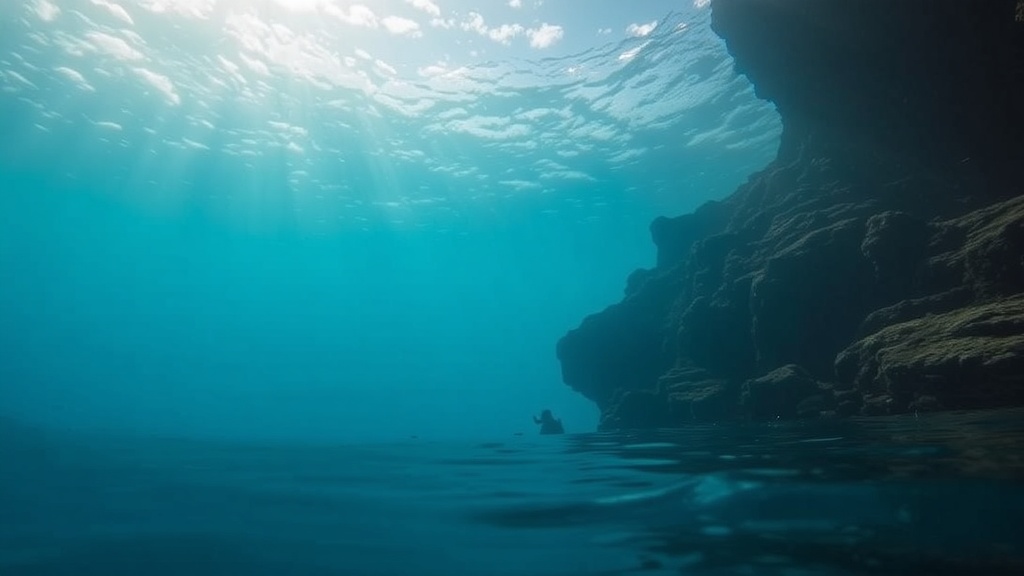
Where to Find Deep Water Access for Freediving Across the Pacific

At a depth of 30 meters, the pressure on your body is four times greater than at the surface. This physical reality dictates how we travel, where we set up camp, and how we approach the water. For those seeking the deep, the logistics of travel are far more complex than just booking a flight. It requires finding specific geographies where the continental shelf drops off sharply, providing access to deep blue water without the need for expensive boat charters or long-distance vessel-based expeditions.
Finding the right spot involves more than just looking at a map; it involves understanding bathymetry—the study of underwater depth. Most travelers look for beaches, but deep-water enthusiasts look for drop-offs. This guide focuses on specific regions in the Pacific that offer high-quality deep water access via shore entry, allowing for more flexible, van-life-friendly travel through the islands.
Which Pacific Islands Offer Best Shore-Access Deep Water?
The Pacific Ocean is massive, but not every island offers the deep water access required for serious breath-hold training or deep exploration. For those living a mobile lifestyle, the goal is to find locations where a vehicle can park near a reliable entry point. The following locations are standout regions for those seeking the verticality of the deep via shore entry:
- The Marquesas Islands, French Polynesia: Unlike the many coral atolls in the South Pacific, the Marquesas are high volcanic islands. This means the seafloor drops away rapidly. You can often find deep water just a short swim from a rugged coastline.
- The Islands of Fiji: While many areas are shallow reef-heavy, certain volcanic outcrops in the outer islands offer much deeper access points. These locations are excellent for those who want to combine island-hopping with deep-water exploration.
- The Cook Islands: Specifically, the areas around the outer islands provide much more dramatic depth changes than the more tourist-heavy lagoons of Tahiti or Bora Bora.
When choosing a destination, keep in mind that these high-island profiles are your best friend. A low-lying atoll will likely keep you in the shallows for a long time, whereas a volcanic island provides that immediate transition from the surface to the deep. This transition is where the magic happens—where the light begins to fade and the pressure starts to signal your body to adapt.
How Can I Find Deep Water Access Without a Boat?
If you aren't traveling with a vessel, your primary tool for scouting is bathymetric data. You don't need to be a scientist to use these tools; you just need to know what to look for. Most people rely on standard GPS, but for deep-water access, you need to look at depth contours. A high density of contour lines near the shore indicates a steep drop-off.
One of the best ways to verify your destination is to use Google Earth Pro. You can use the terrain features to observe how the land meets the sea. If the color transitions from light turquoise to a deep, dark blue very quickly, you've found a winner. This rapid transition is a sign of a steep shelf, which is exactly what you want for deep-water training. You can also consult the NOAA Ocean Explorer tools to get a better sense of the seafloor-to-shore transitions in different regions.
Another tip for the mobile traveler is to look for "blue water breaks." These are often found near the edges of reef systems where the water is incredibly clear and the depth increases rapidly. However, always check local swell reports. A deep drop-off near a shore entry can also mean more aggressive wave energy hitting the coast, which can make your entry and exit more challenging.
What Gear is Needed for Shore-Based Deep Water Travel?
Traveling for deep water access requires a different kit than traditional beach-going. You aren't just packing a towel and sunscreen; you're packing for a high-intensity physical engagement with the ocean. Since you'll likely be living out of a van or a small vehicle, weight and versatility are everything.
- Long-Blade Fins: key for efficient movement in the deep. If you're traveling via shore, you'll likely be doing more heavy lifting during the entry/exit phase, so durability is key.
- Weight Belt and Precision Weights: When you're traveling between different islands, the salinity of the water can change. A weight system that is easily adjustable is a lifesaver.
- A Reliable Dive Computer: This is your most important piece of safety gear. It tracks your depth, descent rate, and surface intervals, which is vital for managing your physiological responses to pressure.
- A High-Quality Mask: Low-volume masks are generally better for deep diving as they require less air to clear during descent.
| Item | Why It Matters for Travel | Alternative for Minimalists |
|---|---|---|
| Dive Computer | Tracks depth and safety intervals | Wrist-worn GPS/Depth watch |
| Long Fins | Efficiency in deep water | Short fins (only for shallow entry) |
| Weight Belt | Buoyancy control | Adjustable rubber belt |
Traveling light is a core tenet of the mobile lifestyle. If you're moving from one island to another, you don't want to be hauling heavy, bulky equipment through crowded ports or difficult-to-handle beaches. Always prioritize gear that serves multiple purposes or can be easily stowed in a small space. The goal is to spend less time managing your gear and more time experiencing the deep.
Remember, the goal of this type of travel is to find the intersection of accessibility and depth. You aren't just looking for a place to swim; you're looking for a place to experience the weight of the ocean and the stillness that comes with it. Whether you're parked on a rugged coast in the Marquesas or a remote beach in Fiji, the depth is waiting for you just beyond the break.