
The Urge to Breathe Isn’t Panic — It’s a Signal You Misread

There’s a moment every diver meets sooner or later… somewhere between the calm glide of descent and the first tightening in the diaphragm. The bellows begin to whisper. Then they knock. Then they demand.
Most people call it panic. They’re wrong.

Let’s talk mechanics.
The urge to breathe is not a countdown timer to blackout. It is a conversation between chemistry and perception. Specifically, it is the rising partial pressure of CO2—not the depletion of oxygen—that triggers the contractions you feel in your diaphragm.
CO2 is not the enemy. It is information. A messenger. It tells you: "Something is changing." That’s all.
But most divers interpret that signal through a nervous system that has been conditioned by stress, shallow breathing, and constant stimulation. So the message gets distorted.
The body says: "Adjust."
The mind hears: "Emergency."

The First Contraction: A Misunderstood Threshold
The first diaphragm contraction is where most dives are psychologically lost—not physiologically.
It arrives early. Earlier than most expect. And because it feels unfamiliar, the diver reacts instead of observing.
But here’s the truth: your oxygen levels are still well within safe margins at this point. The body is not failing. It’s adapting.
The Mammalian Dive Reflex (MDR) is already active—heart rate slowed, blood shifted toward the core, peripheral vessels constricting. You are, in many ways, more stable than you were on the surface.
Yet the mind resists. It tightens. It speeds up. It turns a signal into a threat.

The Real Problem: Tension in the System
Let’s be precise… the issue isn’t the contraction. It’s your response to it.
Most divers carry unnecessary tension into the water. Tight jaw. Rigid tongue. Elevated shoulders. A nervous system that hasn’t been taught how to downshift.
So when CO2 rises, that tension amplifies the sensation. The contraction feels sharper, louder, more urgent than it actually is.
This is why two divers at the same depth, with identical physiology, can have completely different experiences. One feels calm. The other feels like they’re running out of time.
The difference is not in their lungs. It’s in their interpretation.

Training the Interpretation
You don’t train the urge to disappear. You train your relationship to it.
Start on land. Always on land.
CO2 tables are not about pushing limits. They are about learning the language of your body in a controlled environment. You sit with the contractions. You observe them. You notice how they rise… crest… and fade.
Because they do fade.
That’s the part most people never stay long enough to learn.
Each contraction is a wave. If you fight it, it steepens. If you soften, it passes through you.
This is physiological surrender—not passivity, but cooperation.
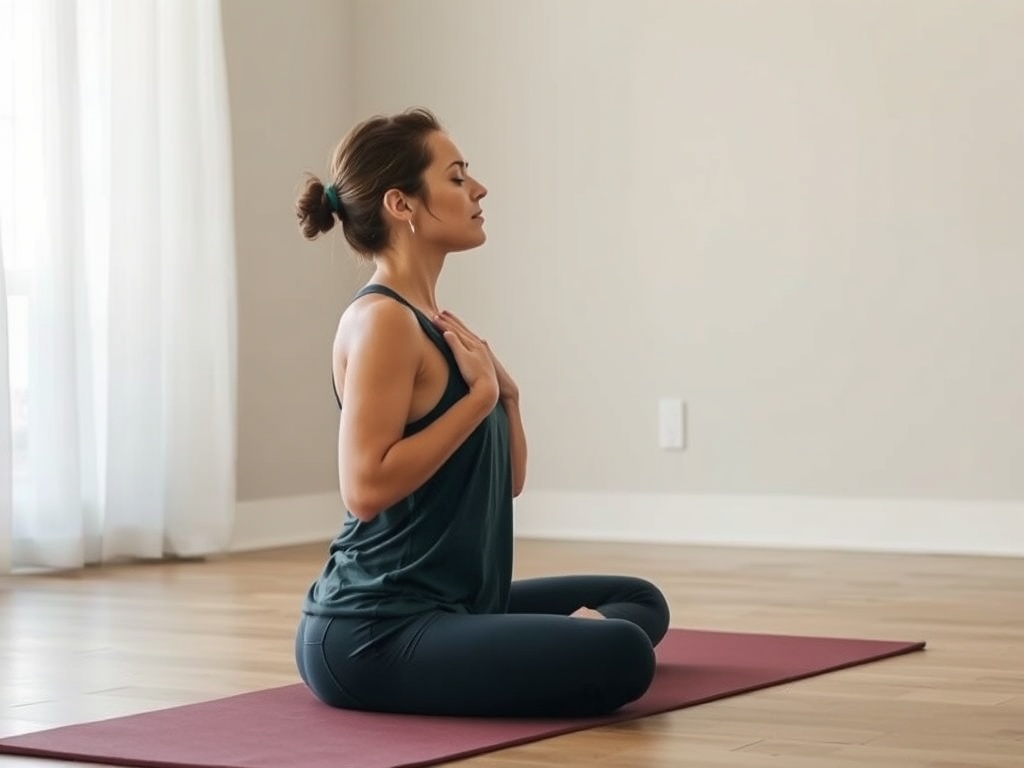
The Role of the Mind: Quieting the Interpreter
The mind is not your enemy, but it is not always a reliable translator under pressure.
When the urge to breathe begins, the mind searches for meaning. If your baseline state is stress, it will assign urgency.
So we train stillness outside the water.
Slow breathing. Extended exhales. Time spent in silence without stimulation. These are not "extras." They are core training.
You are not just increasing tolerance to CO2. You are lowering the reactivity of your entire system.
This is why a calm diver often outperforms a "strong" diver. Strength creates force. Stillness creates efficiency.

Safety Is Not Optional
Let’s ground this.
Understanding the urge to breathe does not mean ignoring it. It means interpreting it correctly within a structured, safe system.
You never dive alone. Not in a pool. Not in the ocean. Not ever.
You respect your limits—not the limits you imagine, but the ones validated through progressive, supervised training.
Because while CO2 triggers the urge, oxygen is still being consumed quietly in the background. And oxygen does not send early warnings.
This is where discipline replaces ego.
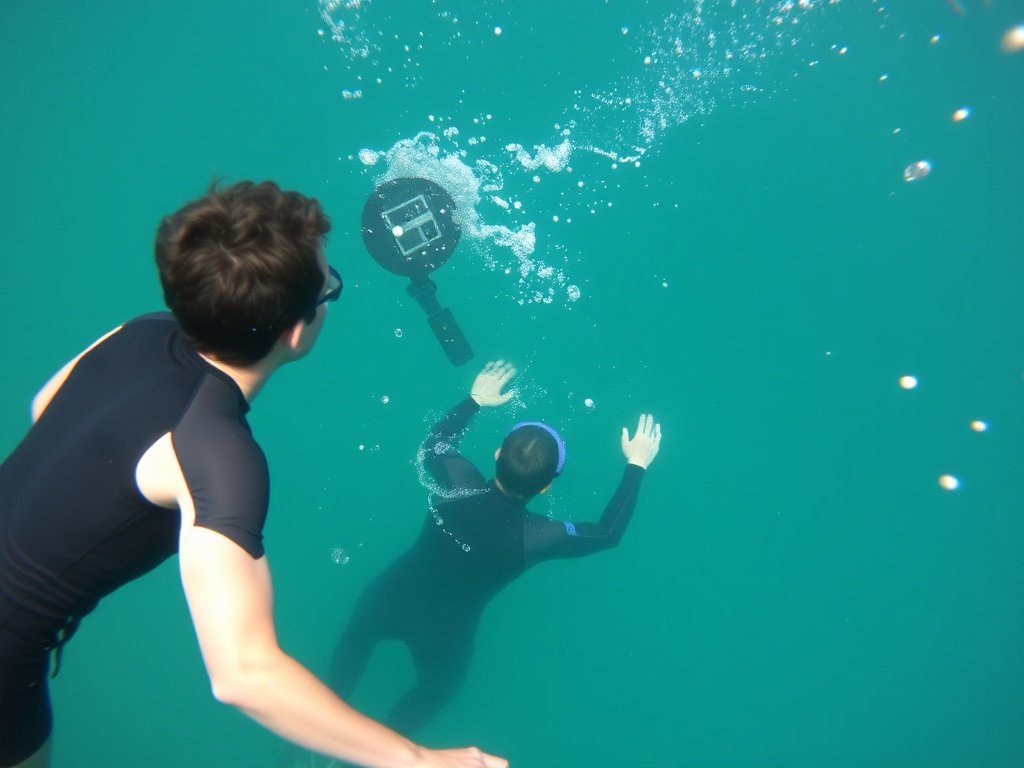
The Shift
At some point, something changes.
The contraction comes… and you don’t react. You notice it. You soften around it. The dive continues—not because you forced it, but because you stopped interfering.
This is the beginning of The Great Quiet.
The body is doing what it was designed to do. The mind steps aside just enough to let it happen.
And suddenly, what once felt like a wall becomes a doorway.
Not deeper… just clearer.
A Simple Protocol to Begin
1. Sit or lie down in a quiet space.
2. Perform 5 minutes of slow breathing—inhale 4 seconds, exhale 8 seconds.
3. Take a comfortable breath hold (no maximal effort).
4. When the first contraction arrives… do nothing.
5. Observe it. Label it: "signal."
6. Stay for one or two contractions longer than feels comfortable.
7. Recover slowly. No gasping.
Repeat. Not to push… but to understand.
This is how you recalibrate the system.
Final Thought
The urge to breathe is not your limit. It’s your introduction.
Most people turn back at the first knock on the door. Not because they have to… but because they don’t recognize who’s knocking.
Learn the language. Stay a little longer. Remove the noise between the signal and your response.
That space… that quiet space… is where the dive actually begins.
Breathe easy, dive safe.