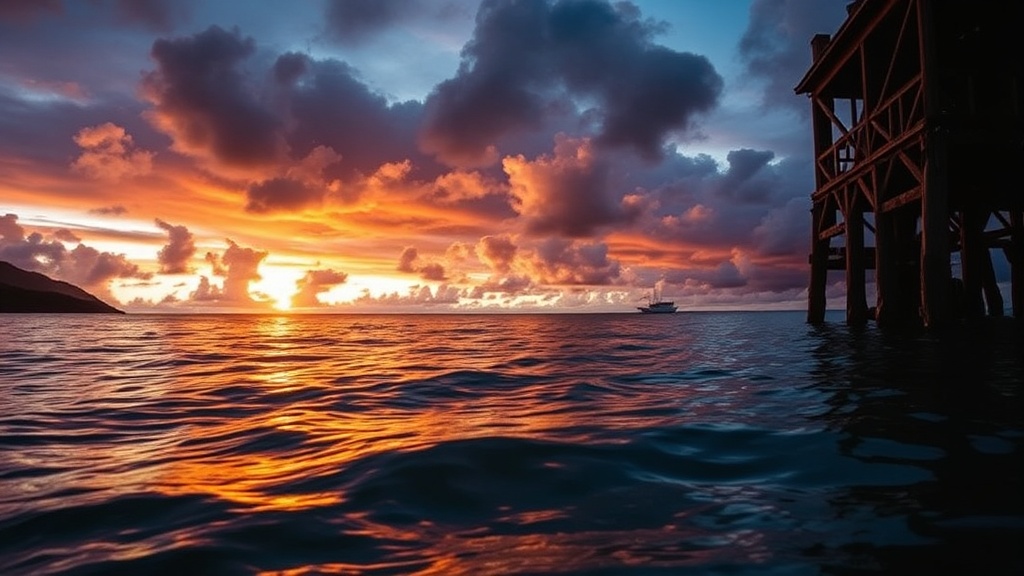
The Logistics of Deep Water Access in the Marquesas Islands

At a depth of 30 meters, the pressure on your chest is three times greater than it is at the surface. For those traveling to the remote Marquesas Islands of French Polynesia, this physical reality is just the beginning of the logistical complexity. This post examines the specific requirements for accessing deep-water sites in this remote archipelago, focusing on the gear, transport, and environmental considerations necessary for long-distance adventure travel. Understanding these variables is a prerequisite for anyone attempting to reach the deep blue in one of the most isolated corners of the Pacific.
Where is the best place to find deep water in the Marquesas?
The Marquesas are not your typical tropical paradise with shallow, sandy-bottomed lagoons. Instead, you'll find steep volcanic walls that drop precipitously from the shoreline into the abyss. Most of the significant depth occurs almost immediately after you leave the shore. For divers and freedivers, this means your access points are often highly dependent on the local swell and the ability to reach a certain distance from the coast. While some islands like Nuku Hiva offer more accessible shore entries, the true deep water often requires more than just a swim.
To reach the significant depths found in these waters, you'll likely need a boat or a reliable way to manage long-distance surface swims. The topography is rugged; you're looking at volcanic basalt-heavy coastlines that can be unforgiving on your fins and your skin. If you're planning an expedition here, you'll want to look at the deep-water channels between the islands, where the current can be quite strong. These channels are the highways of the Pacific, and they serve as a reminder of why preparation is more important than spontaneity in this part of the world.
How much gear do I need for a remote Pacific expedition?
Traveling to the Marquesas isn't like a weekend trip to a local coast. Your gear list needs to be comprehensive and, more importantly, redundant. Since you're traveling to a remote part of French Polynesia, you can't just run to a local shop if your primary equipment fails. I always recommend carrying at least one spare of your most critical items—whether that's a mask, a set of fins, or a specialized dive computer. If your primary way of tracking your depth or time fails, you're essentially flying blind in an environment that demands precision.
- Weight Systems: Because of the verticality of the sea floors, your buoyancy control needs to be dialed in.
- Surface Signaling: In remote areas, a high-visibility buoy or a signal mirror isn't optional; it's a lifeline.
- Navigation Tools: GPS and local charts are vital when you're far from any land-based landmarks.
One of the most overlooked aspects of gear for this type of travel is your physical maintenance kit. When you're living out of a van or a small boat, your body is your primary tool. A high-quality salt-removal kit, a reliable way to clean your gear, and plenty of hydration salts are non-negotiable. The Marquesas can be incredibly taxing on the body, and a small amount of inflammation or dehydration can change how you react to pressure and depth.
What are the best months to visit for deep-water diving?
The seasonality in the Marquesas is different from the rest of the South Pacific. While much of the region relies on a predictable wet and dry season, the Marquesas experience a more constant, heavy rainfall pattern. For those seeking the most stable conditions for deep-water access, the window between May and September is often cited as the most favorable. During these months, the swell tends to be more predictable, making it easier to approach steep walls without fighting heavy surf.
However, "stable" is a relative term. Even in the best months, the Pacific is a living, breathing entity. You must be able to read the swells and the way they interact with the volcanic islands. A swell that looks manageable from the shore can become a wall of white water once you're 50 meters out. I suggest consulting the Météo-France or local maritime reports regularly to understand the wind and swell patterns before you even leave your home base. Knowledge of the local weather is just as important as your ability to hold your breath.
handling the Local Currents
Currents in the Marquesas can be unpredictable and, at times, quite powerful. When you are near the steep drop-offs, the water moves with a certain intensity. It's not just about the depth; it's about the movement of the water column. If you're planning to explore these areas, you need to understand how to use a reel or a line to stay positioned, or how to time your excursions with the tidal shifts. If you're caught in a rip or a strong lateral current, your ability to return to your entry point depends entirely on your ability to read the water's surface tension and color.
For more technical data on ocean currents and how they affect travel, the NOAA Ocean Service provides excellent resources on how global currents function. Understanding these systems can help you plan your approach to the islands more effectively. It's about more than just a destination; it's about understanding the environment you're entering.
The Importance of Local Knowledge
One of the biggest mistakes travelers make in remote areas is assuming their pre-trip research is sufficient. While satellite imagery and digital charts are helpful, they don't capture the nuances of a local current or a hidden reef entrance. Whenever possible, spend time talking to local boat operators or residents. They know the water in a way that no app can replicate. They can tell you which bays are safe for a shore entry and which ones will trap you in a swell. This isn't just about being polite; it's about being safe.
The Marquesas are a place of immense beauty, but they demand respect. The transition from the surface to the deep is a physical and mental shift that requires total presence. Whether you're traveling by boat or trying to find a way to access the water from the coast, remember that your success depends on your ability to adapt to the conditions, not the other way around. The deep is waiting, but it doesn't wait for anyone who hasn't prepared.