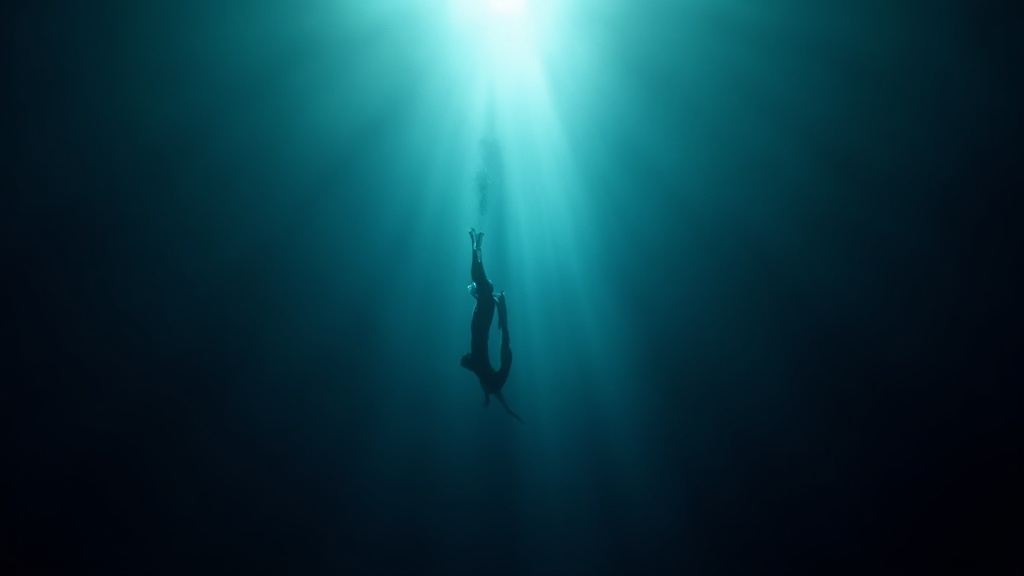
The First Descent: What the Surface Will Never Teach You
There is a moment... just after your final breath, just before the first kick... where the world inverts.
On the surface, we are bombarded. Notifications. Deadlines. The low-frequency hum of machinery and anxiety. Our nervous systems are tuned to a frequency of perpetual vigilance—heart rates elevated, breath shallow, muscles braced for threats that never materialize. We have forgotten how to be still. We have forgotten that stillness is not the absence of motion, but the mastery of it.
This is why I freedive. Not for the numbers. Not for the metrics that the ego craves. I dive to remember. To remember that my body—this fragile, land-adapted vessel—carries within it ancient blueprints for the deep.
Let’s Talk Mechanics: The Mammalian Dive Reflex
When your face submerges in water cooler than your core temperature, something miraculous occurs. Your heart rate drops—immediately, involuntarily, beautifully. Blood vessels constrict in your extremities, shunting oxygen-rich blood to the organs that matter: the brain, the heart, the bellows (the lungs). This is the Mammalian Dive Reflex (MDR), and it is your birthright.
We share this reflex with dolphins, seals, and whales. It is the echo of an aquatic past, dormant in most humans, waiting to be awakened through practice and surrender. When I teach students their first static breath-hold, they are shocked to discover that their bodies want to conserve oxygen. They are shocked to learn that the "urge to breathe" they feel at 90 seconds is not a signal of oxygen deprivation, but of rising CO2—a sensation that can be observed, accepted, and transcended.
The MDR is not a trick. It is not a "hack." There are no shortcuts to the deep. It is a physiological partnership between you and the ocean, forged through patience and humility.
The Architecture of Surrender
Freediving is the only sport I know where performance is inversely correlated with effort. The more you fight, the sooner you surface. The more you surrender, the deeper you go.
At 20 meters, the ocean begins to claim you. Negative buoyancy takes over. Your wetsuit compresses. The water pressure squeezes your lungs to half their surface volume. Most people panic here. Their diaphragm screams. Their mind invents emergencies. They claw for the surface, burning precious oxygen with every thrashing stroke.
But if you train... if you spend months on dry land practicing diaphragm stretches and CO2 tables... if you learn to observe the urge to breathe as a sensation rather than a command... something shifts. At depth, you enter what I call The Great Quiet.
The mind stops chattering. The inner monologue ceases. There is only the present moment: the soft thud of your heartbeat in your ears, the gentle glide past thermoclines, the blue deepening to indigo, to violet, to black. You are not conquering the ocean. You are becoming compatible with it.
Safety as Religion
I must say this clearly, because lives depend on it: You never dive alone.
The allure of the deep can become a death wish if the ego takes the wheel. Every year, competent swimmers die in shallow water because they ignored this fundamental rule. Blackout—loss of consciousness from hypoxia—gives no warning. One moment you are finning toward the surface, the next you are gone. The only thing that saves you is a trained buddy, one arm's length away, ready to lift your airway above the waterline.
Safety is not a checklist. It is a state of being. It is the discipline to call a dive when conditions are wrong, when the buddy is distracted, when your own intuition whispers doubt. The ocean does not care about your Instagram post. Respect it, or it will teach you respect on its own terms.
The 70% Rule
Here is what the surface world does not understand: your deepest dive is built on land.
Seventy percent of freediving training happens dry. Diaphragm flexibility exercises. Static breath-hold tables. Pranayama and breathwork. Mental visualization. Equalization drills for your Frenzel technique. These are not warm-ups. These are the foundation.
I have seen students buy $1,200 carbon fins before they can hold their breath for three minutes. I have seen them chase depth before they can equalize hands-free at five meters. This is ego-diving, and it is a fast track to injury or worse. Skill > Carbon. Master your physiology in plastic fins. Earn your descent.
Your tongue posture during your daily commute is affecting your ability to equalize at depth. The tension in your soft palate from a day of email anxiety is why your Frenzel fails. The shallow breathing you default to in meetings is limiting your total lung capacity. Freediving is not something you do on weekends. It is a practice that infiltrates every aspect of how you inhabit your body.
The Invitation
This blog—The Blue Stillness—is my offering to anyone who feels the call of the deep. Whether you are a land-locked office worker seeking the calm of the MDR, or an aspiring depth athlete preparing for your first competition, or simply someone who suspects there is more to breath than mere survival.
Here, we will explore the mechanics and the philosophy. Technical Tuesdays for the science of pulmonary elasticity and partial pressures. Friday Flow for the psychology of surrender and the Blue Mind state. Sunday Safety for the non-negotiables that keep us alive.
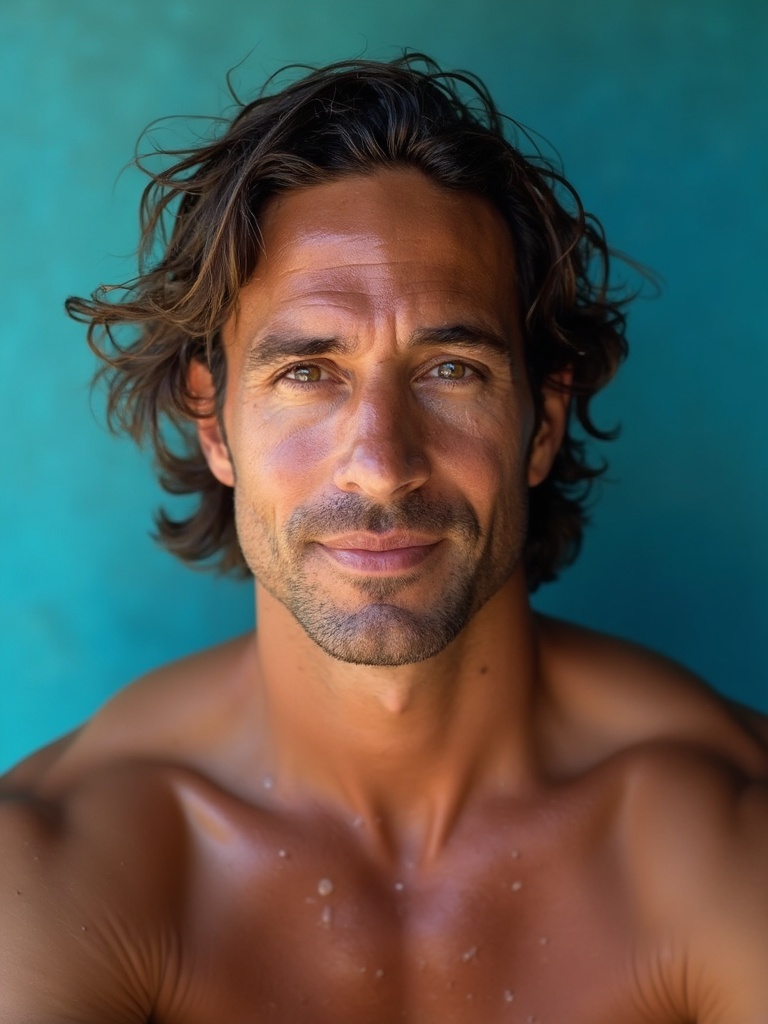
I live in a converted van in Kailua-Kona. My "office" is anywhere between 0 and 60 meters below the surface. I named my carbon fins Orion and Lyra. I refuse to wear a watch on land because time is for the surface—depth is for the soul.
If you are here, you already feel it. That pull toward silence. That suspicion that your body holds capacities you have never tested. That longing to find the space between your thoughts.
The descent awaits. But first... breathe.
Breathe easy, dive safe.
— Koa