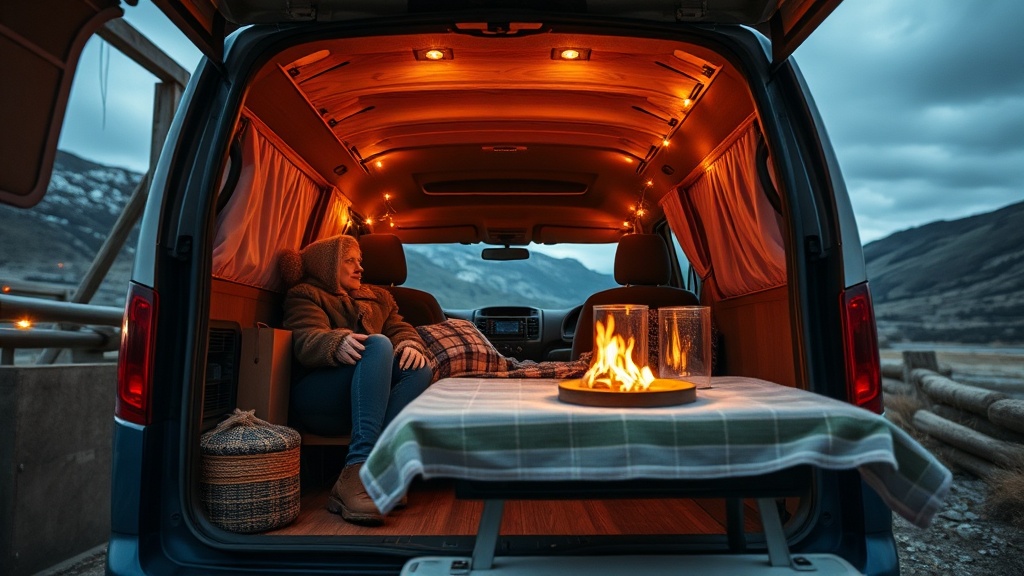
Staying Warm in a Van While Camping in the Highlands

A temperature drop of fifteen degrees Fahrenheit in under two hours can turn a comfortable van into a refrigerator. When camping in high-altitude regions like the Big Island highlands or the Appalachian mountains, the thermal challenge is twofold: the rapid loss of ambient heat and the increased rate of heat transfer from your body to the surrounding environment. This guide provides practical, science-based strategies for managing thermal regulation while living or traveling in a van, focusing on insulation, moisture management, and heat generation to ensure you stay safe and functional in cold climates.
The Physics of Van Insulation
The primary reason vans feel colder than traditional structures is the lack of thermal mass and the high conductivity of metal. A standard aluminum or steel van shell offers almost zero R-value (the measure of thermal resistance). Without intervention, your body heat will be pulled through the walls via conduction almost immediately. To combat this, you must create a thermal break between your living space and the vehicle's exterior.
Selecting Insulation Materials
When building out a van for high-altitude or cold-weather travel, the type of insulation you choose dictates your comfort level. Avoid fiberglass batts, as they compress easily and lose effectiveness if they become damp. Instead, focus on materials that provide high R-value per inch and are moisture-resistant.
- Closed-Cell Foam (CCF): This is highly effective for small gaps and provides a solid thermal barrier. It is also moisture-proof, which is critical in environments where condensation forms on the interior metal.
- Havelock Wool: This is a premium option for van builders. Wool is hygroscopic, meaning it can absorb moisture from the air without feeling wet, and it maintains its insulating properties even when damp.
- Thinsulate: Often used in technical outerwear, synthetic insulation like 3M Thinsulate is excellent for lining walls because it is lightweight and resistant to the moisture common in high-altitude environments.
Managing Condensation and Humidity
In a confined van, your breath is a constant source of moisture. If this moisture hits a cold metal surface, it turns into liquid water. This water then conducts heat away from you much faster than dry air would. To manage this, you must implement a ventilation strategy. Even when it is cold, you need airflow. Using a MaxxAir Fan on a low setting or cracking a window slightly allows moisture-laden air to exit, preventing the "wet cold" feeling caused by damp surfaces and bedding.
Personal Thermal Management
While insulating the van is important, your immediate survival and comfort depend on how you manage your own body temperature. As someone who studies human adaptation to pressure and temperature, I look at heat retention as a layering problem. You are essentially trying to create a micro-climate around your skin.
The Layering System
The goal of layering is to manage moisture and trap air. Air is one of the best insulators, but only if it is trapped in place. If you wear a single thick sweater, you lose more heat than if you wear three thin, specialized layers.
- Base Layer (Moisture Wicking): Never use cotton. Cotton absorbs sweat and stays cold, which can lead to rapid hypothermia. Use Merino wool (such as Smartwool or Icebreaker) or synthetic fabrics that pull moisture away from the skin.
- Mid Layer (Insulation): This layer is designed to trap heat. A fleece jacket or a lightweight down vest works well here. Down is highly efficient for warmth-to-weight ratio, but ensure it is treated for moisture if you are in a humid environment.
- Outer Layer (Protection): This layer protects you from wind and ambient moisture. A high-quality windbreaker or a softshell jacket prevents the "wind chill" effect from stripping the heat from your mid-layers.
Sleeping Systems for High Altitudes
Your sleeping bag is your most critical piece of equipment. When selecting a bag, look at the "Comfort Rating" rather than the "Extreme Rating." The extreme rating is a survival metric, while the comfort rating is what you actually need for a restful night. For highland camping, a bag rated for at least 10-15 degrees lower than the expected ambient temperature is recommended.
To further enhance your sleep system, use a high-quality sleeping pad. Most people focus on the bag, but the ground is a massive heat sink. A pad with a high R-value (4.0 or higher) like the Therm-a-Rest NeoAir creates a necessary barrier between your body and the cold van floor.
Active Heat Generation
Sometimes, passive insulation is not enough, especially during unexpected cold snaps. In these instances, you need an active way to introduce heat into your environment or your person.
Portable Heat Sources
If you are stationary for a few days in a cold region, you may need a supplemental heat source. However, safety is paramount. Never use a combustion heater (like a propane heater) inside a small, unventilated van due to the risk of Carbon Monoxide poisoning. Instead, consider these options:
- Electric Blankets/Heated Pads: If your van is equipped with a secondary battery system (like a Battle Born or Renogy setup) and an inverter, a 12V heated blanket is a highly efficient way to stay warm without heating the entire volume of the van.
- Hot Water Bottles: This is an old-school, highly effective method. Boiling water in a kettle and placing a Nalgene bottle (ensure it is heat-resistant) inside your sleeping bag provides several hours of localized heat.
- Diesel Heaters: For those with a permanent van build, a Webasto or a generic diesel heater is a game-changer. These units draw fuel from a separate tank and vent exhaust outside, providing consistent, safe warmth.
Nutrition and Hydration
Digestion produces heat. In cold environments, your metabolic rate increases as your body works to maintain its core temperature. Consuming complex carbohydrates and healthy fats provides sustained energy for this process. A meal high in fats, such as nuts or a hearty stew, can provide a slow-release heat source for your body. Additionally, staying hydrated is vital; dehydration reduces your blood volume and makes you more susceptible to the cold. Even if you do not feel thirsty, prioritize drinking warm liquids like herbal tea or broth.
The Importance of Reading Your Body
In high-altitude environments, the physiological response to cold can be subtle. You must learn to recognize the early stages of heat loss before they become dangerous. If you notice shivering, this is your body's involuntary attempt to generate heat through muscle contraction. If shivering becomes violent or if you feel a sense of mental confusion or lethargy, you have moved past the stage of simple discomfort and into a state of physiological stress.
Just as I teach freedivers to listen to the subtle shifts in their heart rate and breath during a descent, van travelers must listen to the subtle shifts in their internal temperature. If you feel a "chill" that won't go away despite layering, your core temperature is likely dropping. Do not wait for the symptoms to escalate; immediately implement your active heating strategies, such as drinking a hot beverage or using a heated pad.
Proper preparation for high-altitude van camping is not about fighting the elements, but about working with the science of thermal regulation. By combining structural insulation, strategic layering, and an understanding of your body's metabolic needs, you can maintain a safe and comfortable environment regardless of the temperature outside.