Savoring the Spice: A Traveler's Hack for Balancing Street Food Heat

Quick Tip
Reach for dairy or starch rather than water to effectively neutralize spice sensations.
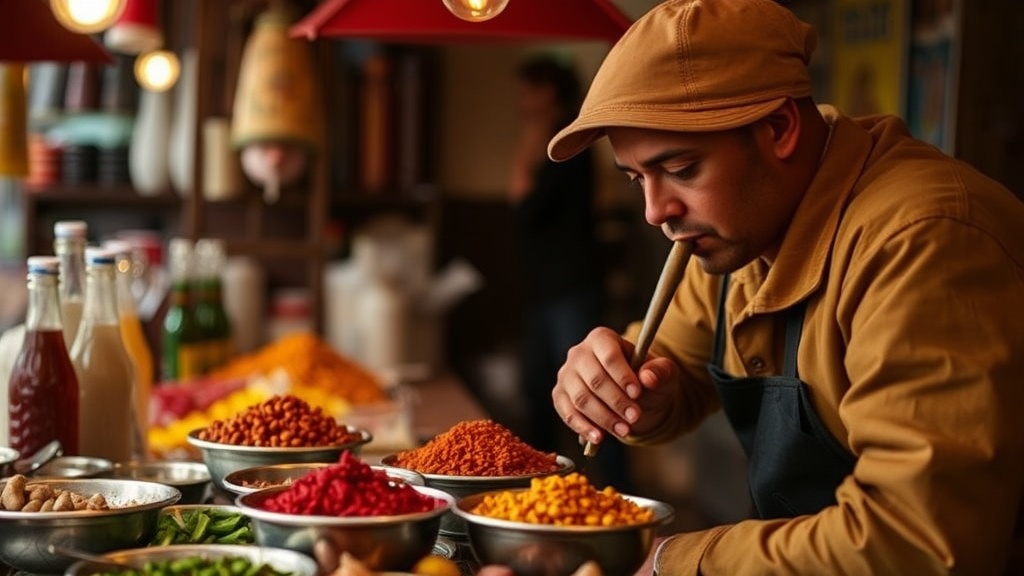
A traveler sits at a crowded street stall in Bangkok, the air thick with humidity and the scent of lemongrass. They take a single bite of a spicy papaya salad, and suddenly, the heat isn't just a flavor—it's a physical sensation that dominates their senses, making it impossible to enjoy the nuances of the dish. The panic of a burning palate often leads travelers to reach for the nearest beverage, frequently making the problem worse.
The Science of the Burn
The sensation of "heat" in food is caused by capsaicin, an alkaloid that binds to TRPV1 receptors in your mouth. These receptors are designed to detect heat and pain. To neutralize this, you cannot rely on water; water is a polar molecule and does not dissolve capsaicin, which is a non-polar lipid. Instead, you need a substance that can physically bind to or wash away the oil.
The Essential Toolkit for Spicy Travels
When navigating markets from the high altitudes of the Atlas Mountains to the tropical heat of Southeast Asia, keep these specific items in your day pack to manage your physiological response to spice:
- Full-Fat Dairy: If you are dining in areas where it is accessible, reach for Greek yogurt or whole milk. The protein casein acts like a detergent, breaking the bond between capsaicin and your nerve receptors.
- Acidic Counterpoints: If dairy is unavailable, look for lime wedges or a splash of vinegar. The acidity of a fresh lime can help neutralize the alkaline nature of certain spicy components.
- Starch Absorbers: Keep a small bag of plain white rice or even a piece of crusty bread. These act as physical sponges to absorb the capsaicin oils before they hit your mucous membranes.
- The Sugar Trick: A spoonful of honey or even a piece of fruit can provide a quick chemical counterbalance to the heat.
Practical Application
To avoid a complete sensory overload, practice incremental tasting. Rather than taking a large bite, use a small fork to sample a tiny portion of the sauce first. This allows your body to begin the process of adaptation. Just as you learn to regulate your breath and manage the physiological urge to inhale during a deep dive, you can learn to manage the discomfort of spice by pacing your consumption and having your "antidotes" ready before the first bite.
"Understanding the chemical interaction between your palate and your food allows you to experience culture without the physical distress of an unmanaged reaction."