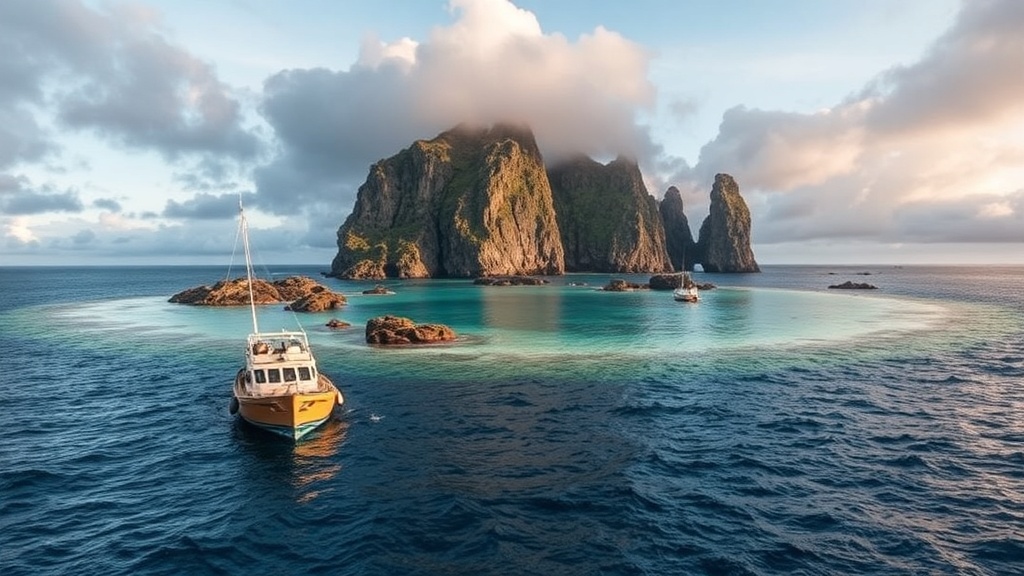
Remote Archipelago Expeditions: Selecting Your Next Deep Water Destination

A single breath can carry you through more pressure than a human body experiences in several days of terrestrial life. When you're planning an adventure centered around deep water exploration, the destination isn't just a spot on a map—it's a biological interaction. Choosing where to go involves more than just checking weather patterns; it requires an understanding of thermoclines, current profiles, and the availability of support systems. This post covers the specific criteria for selecting remote water destinations that favor physiological adaptation and deep-water exploration.
Traveling to remote locations often means trading convenience for depth. In the middle of the ocean, the lack of infrastructure becomes part of the challenge. You aren't just looking for a beach; you're looking for a place where the bathymetry allows for meaningful descent and where the water temperature won't shock your system into a premature contraction. Whether you're eyeing the volcanic arches of the Atlantic or the coral atolls of the Indo-Pacific, the way you select your site dictates your success.
Where are the best remote diving locations?
The "best" location is entirely subjective to what your body needs at that moment. If you're looking for verticality, volcanic islands offer dramatic drop-offs that lead straight into the abyss. The Azores, for instance, provide a rugged, high-energy environment that tests your ability to manage currents. On the other hand, if you're looking for more controlled environments to practice breath-hold efficiency, atoll structures in the Maldives or French Polynesia often provide more sheltered lagoons.
When researching these spots, don't just look at the depth. Look at the way the seafloor is shaped. A steep wall is a different beast than a gradual slope. A steep wall can be a beautiful training ground, but it also means you're closer to the unpredictable energy of the open ocean. For those tracking biological rhythms, the presence of seasonal upwellings can change the temperature profile of a destination overnight. You might find a spot that's 25 degrees Celsius one week and 18 degrees the next—a massive shift for your mammalian dive reflex to handle.
| Destination Type | Primary Benefit | Primary Challenge |
|---|---|---|
| Volcanic Islands | Extreme depth, vertical walls | High currents, unpredictable thermoclines |
| Coral Atolls | Sheltered lagoons, calm water | Limited depth, shallow reef systems |
| Archipelago Chains | Diverse ecosystems, varied terrain | Logistical complexity, long transit times |
The logistical reality of these places often means you're living out of a boat or a van. This level of autonomy is part of the adventure, but it requires a different kind of preparation. You can't rely on a local dive shop to have your size in a 5mm suit or a specific weight belt. You become your own support system.
How do I plan a deep water adventure trip?
Planning begins with a deep dive into bathymetric maps. You need to know exactly what's happening beneath your fins before you even pack a bag. Using tools like Google Earth can give you a rudimentary look at the underwater topography, but it doesn't tell the whole story of the current. You'll want to cross-reference topographical data with local oceanic reports. For instance, understanding the El Niño Southern Oscillation (ENSO) cycles can change how much water is actually moving through a specific region during your visit.
Budgeting for a remote adventure isn't just about the flights. It's about the cost of access. Many of the best deep-water spots are in protected marine areas that require specific permits or involve high boat rental fees. If you're traveling via van-life style, your "basecamp" is mobile, but your "dive site" is fixed. This means your transit time from your sleeping quarters to the water is a variable you must calculate. A three-hour drive to a trailhead or a boat launch can eat into your recovery time, which is a mistake if you're trying to train for depth.
One often overlooked aspect is the physical toll of the environment. If you're heading to a high-altitude or high-pressure environment, your body's ability to recover is tested. I always suggest checking the NOAA Ocean Service reports for regional sea-surface temperatures. If you show up to a destination expecting tropical warmth and find a cold-water upwelling, your training session is effectively over before it starts. You need to be able to adapt your gear and your expectations on the fly.
What gear is needed for remote water exploration?
When you're far from a city, your gear is your lifeline. You don't just need a mask and fins; you need a kit that accounts for the lack of a safety net. This includes a reliable way to signal for help, high-quality buoyancy control, and tools for equalization that won't fail when the pressure climbs. If you're traveling-solo or in a small group, carrying a redundant weight system or a backup compass is a smart move. You're not just a tourist; you're an explorer in an environment that doesn't care about your comfort.
The choice of a wetsuit or a wetsuit-plus-vest combination is also a critical decision. In remote locations, you might find yourself in water that is much colder than the surface temperature suggests. A sudden thermocline can drop the temperature by several degrees in a matter of feet. Having a suit that provides enough thermal protection to keep your core temperature stable is vital for maintaining the focus required for deep dives. If you're shivering, you're not reading your body—you're just fighting the cold.
Lastly, consider your documentation. Digital maps and GPS are great, but in remote areas, sometimes the old ways are better. A physical chart or a printed map of the local topography can be a lifesaver when electronics fail due to salt spray or battery death. Your preparation should be as deep as the water you intend to enter. Every piece of gear you bring should have a purpose, and every contingency should have a plan. This is the reality of adventure travel in the deep.