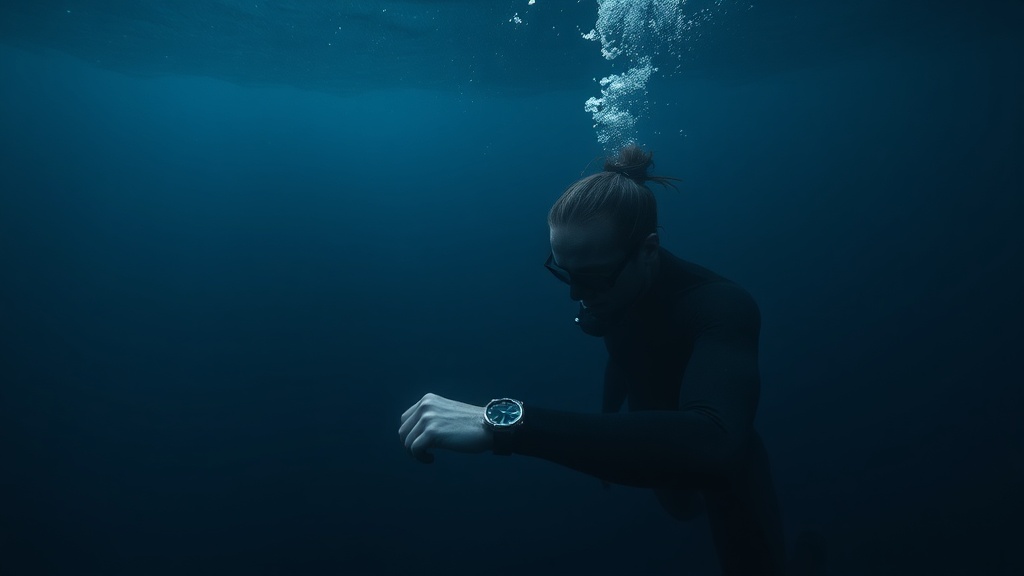
Diving Technology: The Only Outdoor Gadgets That Matter

Every spring, the same thing happens.
Water warms up. Feeds fill with shiny "must-have" outdoor gadgets. People show up at the line with new wrist tech, new apps, new confidence, and the same old blind spots.
I live in Kona and spend most of my working hours as a safety diver. I've watched elite athletes set records, and I've watched strong swimmers panic in six feet of water when stress got loud.
My bias is simple: if a piece of diving technology does not clearly improve decisions, situational awareness, or rescue speed, it is optional. Useful sometimes, yes. Essential, no.
The Gadget Trap: Stimulation Disguised as Safety
Most consumer outdoor gadgets are designed to capture attention first.
They buzz.
They congratulate.
They hand you a dashboard that looks precise but ignores context: current, temperature, sleep debt, training load, and the most dangerous variable in freediving, ego.
My opinion from deck-level reality: a lot of divers are now over-instrumented and under-prepared.
The question I ask before buying anything is this:
Will this help me make a better call in the 30 seconds after a hard ascent?
If the answer is no, it stays on the shelf.
1) Dive Computer: Conservative Beats Clever
If you only buy one piece of modern diving technology, buy a dive computer you can trust under stress.
Not the one with the most features. The one that does four things cleanly:
- Logs depth and dive time reliably.
- Gives clear, configurable alarms for depth, interval, and ascent rate.
- Stays readable in glare, chop, and task-loaded conditions.
- Lets you run conservative settings without fighting the interface.
Conservative settings will bruise your ego. Good.
I don't care if your computer has twenty training widgets. I care whether you can read it instantly with narrowed vision, elevated CO2, and fine motor control getting sloppy.
Unreadable displays are not a minor UX flaw in this sport. They are a safety risk.
What I tell students:
- Train with the same alarm structure every session.
- Keep alert logic simple enough to remember when stressed.
- Review logs for patterns, not for bragging rights.
Your computer is not there to prove you're advanced. It is there to remove ambiguity.
2) Pulse Oximeter: Data Over Pride
Pulse oximeters are imperfect, especially in wet, windy, post-dive conditions. That's not a hot take; the FDA explicitly warns that pulse ox readings have known accuracy limits and can be affected by factors like motion, circulation, skin pigmentation, and perfusion.
So I treat pulse ox as trend data, never truth.
Freediving physiology research has linked oxygen saturation and heart-rate behavior to hypoxic stress and recovery dynamics. That does not mean a fingertip reading predicts blackout by itself. It means those signals can add context when combined with trained observation.
In practice, I use SpO2 snapshots to answer one question:
Is this diver actually recovering, or just saying they're fine?
Because "I'm good" is still one of the most expensive sentences in this sport.
A simple post-dive protocol works better than random readings:
- Measure at consistent checkpoints (for example: 30-60 seconds post-surface and again at 2-3 minutes).
- Track trends across sessions, not isolated numbers.
- Pair readings with behavior: speech quality, motor control, gaze stability, and breathing pattern.
- If data and behavior disagree, default to caution.
Pulse ox does not replace trained observation. It sharpens it when used correctly.
3) Lanyard and Rigging: Boring Gear That Saves Lives
Here's what gets ignored every spring.
The most important safety equipment in depth training is still low-tech:
- A proper lanyard in good condition.
- Correct attachment and quick-release function.
- A correctly rigged line and bottom setup.
- A team that checks all of it every session.
In organized competition frameworks (AIDA/US Freediving practice standards and CMAS rules), lanyards are mandatory for a reason: they are a core barrier against separation from the line and delayed recovery.
My claim here is practical, not dramatic: lanyard and rigging discipline is where small errors stop becoming large emergencies.
Pre-dive rigging checklist I run with students:
- Lanyard tether, swivel, and carabiner inspected by touch and sight.
- Quick release tested deliberately, not symbolically.
- Line tension and depth marker placement confirmed.
- Roles assigned: primary safety, backup safety, surface coach.
- Rescue path and extraction steps verbally confirmed.
No one gets in the water until this is done.
The Minimalist Safety Stack
If you asked me to build a serious outdoor gadgets kit for freediving this spring, it would be short:
- Reliable dive computer with conservative alarms.
- Finger pulse oximeter for structured recovery checks.
- High-quality lanyard and clean line-rigging setup.
- Waterproof slate or wet-notes backup for session plan and emergency cues.
That's it.
Everything else is optional until these are automatic.
Final Word for Spring Season
Spring is when motivation spikes and restraint gets weaker.
Before you buy more diving technology, audit your safety equipment and your behavior.
If your tools make you quieter, more honest, and more consistent, keep them.
If they make you feel advanced while skipping fundamentals, they're noise.
The ocean does not care what you bought this week.
It responds to preparation.
Notes on Evidence
- FDA safety communication and consumer guidance on pulse oximeter limitations support cautious interpretation of spot SpO2 values.
- Peer-reviewed freediving studies on hypoxia, heart-rate responses, and blackout-related physiology support using SpO2/HR as context signals, not standalone clearance.
- AIDA/US Freediving and CMAS competition safety frameworks require lanyards in depth disciplines.