Blue Mind Isn't Woo-Woo: What Saltwater Does to a Stressed Brain
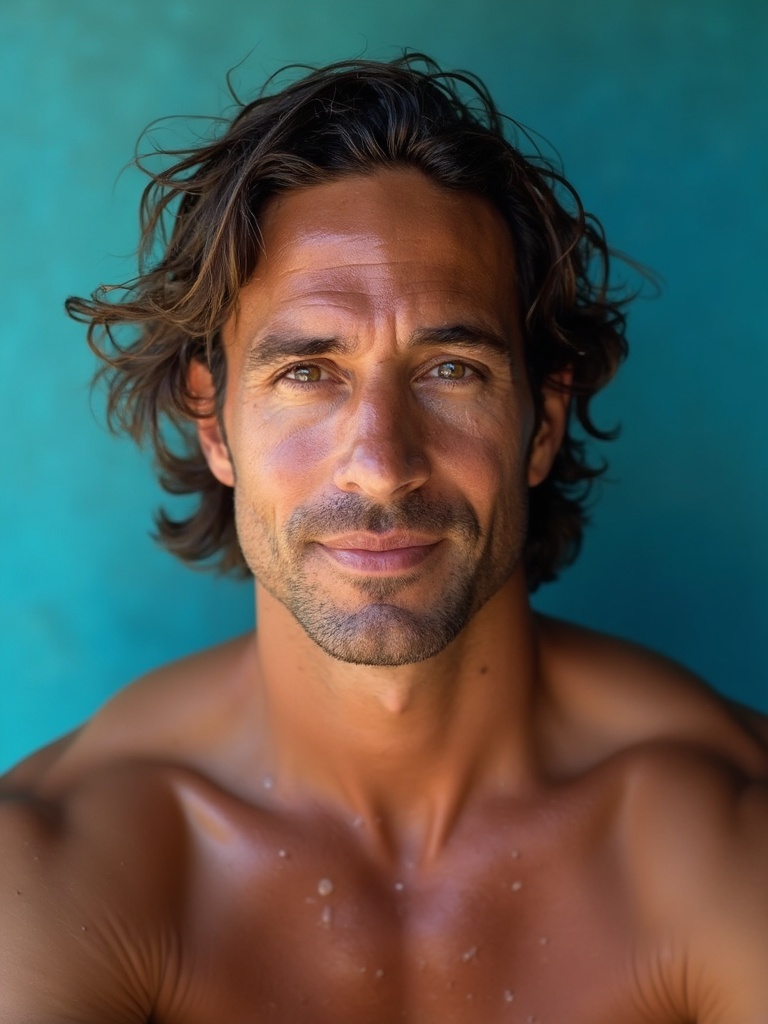
There's a conversation I have constantly. Someone drives up to the boat ramp in Kailua Bay — laptop bag still in the back seat, jaw tight enough to crack — and they ask me: "Does the ocean really help with stress, or is that just something people say?"
It's just something people say. Until it isn't.
Wallace J. Nichols spent years collecting data that most of us already felt in our bodies before we could name it. His 2014 book Blue Mind isn't a manifesto for beach vacations. It's a neurological argument: proximity to water — rivers, lakes, ocean — produces measurable shifts in cortisol levels, alpha wave activity, and heart rate variability. Researchers at the University of Exeter (Mathew White and colleagues, Health & Place, 2013; extended through the BlueHealth consortium) followed it up with population-level studies linking "blue space" to wellbeing outcomes independent of green space, income, and activity level. This isn't anecdote. The data is replicable.
People have been trying to convince themselves this was woo-woo for a decade. It's not.
But here's what the blue space research mostly captures: standing near the water. Walking along a shoreline. Looking at it from a hotel balcony. What it hasn't fully reckoned with yet — what I watch happen in every single session I teach — is what happens when you go in.
The Mammalian Diving Reflex Is Not a Trick. It's a Reset.
When you submerge your face in water, your body does something that has no polite equivalent on land. The vagus nerve fires. Heart rate slows — in trained divers, studies have documented drops ranging from roughly 10 to 25 percent during submersion, with considerable individual variation (Ferretti, Respiration Physiology, 2001; Schagatay & Andersson, European Journal of Applied Physiology, 1998). Blood redistributes from the extremities toward the core and vital organs. The spleen contracts, releasing a bolus of oxygen-rich red blood cells into circulation — an effect documented in both trained divers and untrained subjects, though the magnitude varies (Bakovic et al., Journal of Applied Physiology, 2003).
This is the Mammalian Diving Reflex (MDR), and it is one of the most reliable forced parasympathetic responses the human body is capable of producing.
Meditators chase this state. They build practices over years — breath work, body scans, mantras — trying to dial down the sympathetic "fight-or-flight" system and let the parasympathetic "rest-and-digest" state take over. A practiced meditator working deliberately might get there in ten to fifteen minutes. A freediver face-down in cool water? Often within a minute — sometimes faster in experienced divers, based on documented bradycardia onset times. The comparison isn't perfectly controlled, but the mechanism is not the same. I'm not saying meditation isn't valuable. I'm saying the MDR is not metaphorical. It is a hardwired physiological override that your nervous system has been carrying since before you were born. The ocean activates it. Breath-holding appears to accelerate the process because it disrupts the habitual rhythm of inhale-exhale you've been running on autopilot — and when that rhythm breaks, the nervous system reorganizes around a new signal.
That signal is stillness.
Why Saltwater Specifically
This is where it gets interesting, and where the blue space research hasn't fully caught up to what freedivers experience.
Submersion isn't the same as proximity.
When you descend below the surface — even to five meters — you enter sensory reduction. Background noise drops precipitously. Your field of vision narrows. Hydrostatic pressure increases across the entire body surface, and that pressure appears to interact with vagal tone; the precise mechanisms are still being worked out in the literature. The subjective report from divers is consistent: something quiets. Not just around you. In you.
Temperature thermoreception adds another layer. Cold water on the face — specifically the trigeminal nerve distribution around the forehead and cheeks — is one of the more reliable triggers for MDR onset. Colder water tends to produce a sharper initial response; warmer water produces a gentler, more sustained one. The Kona coast's surface temperature typically runs 76–80°F, which tends to produce a meaningful MDR response without the thermoregulatory demands colder water would impose. Those temperatures aren't a constant — they shift with season and conditions — but they're generally in the right range for this kind of work, which is one reason I teach here rather than somewhere with more variability.
Saltwater buoyancy matters separately. In freshwater, you work harder to maintain neutral buoyancy. In saltwater, the water supports more of that work. That's not aesthetic — it's a reduction in proprioceptive load. Fewer stabilizing muscles firing, fewer competing signals. Whether this effect is fully irreproducible in a pool is an honest question — a saltwater pool with proper salinity would approximate it. But most pools aren't that, and the ocean adds current, depth cues, and a sensory environment that a tile bottom doesn't offer.
What I Actually See in the Water
I keep informal records. I don't run a clinical study — I run a classroom, and my classroom is three to twenty meters below the surface of Kailua Bay. What I observe is pattern recognition over years of sessions, not controlled data.
Students who arrive with elevated stress signatures — the tight jaw, the shallow chest breathing, the inability to relax on the surface even when their technique is sound — consistently take noticeably longer to equalize in their first sessions. By my informal count, it's often in the range of 30 to 50 percent more time and attempts, though I wouldn't put that number in a paper. Not because they lack the mechanics. Most of them have the mechanics. Their nervous systems won't allow the execution.
Equalization requires a specific quality of softness in the palate and throat. When you're running on cortisol, that softness isn't available. The body is in a holding pattern — everything tensed and ready for a threat that isn't coming. You can't Frenzel through a cortisol spike. You cannot will your body into The Great Quiet while your adrenals are still debating whether the email you read this morning was actually an emergency.
This is what I mean when I say the ocean tells the truth. You can lie on land. You can perform calm. You can say "I'm fine" in a thousand different registers. But at fifteen meters, with a column of water above you and your body on its own oxygen supply, the nervous system reveals exactly what it's actually doing. There's no performance at depth.
The students who improve fastest aren't necessarily the most athletic. They're the ones who let the ocean do what it's trying to do — which is reset them. They stop fighting the stillness and let the MDR run its course. By session three or four, the equalization lag is gone. Not because I taught them a technique. Because they stopped showing up pre-loaded with cortisol and their bodies could finally execute what they already knew.
The Lab Argument for Kona
I'm biased. I live here, I teach here, I'm writing this from a van parked thirty feet from the water. But bias and correctness aren't mutually exclusive.
The Big Island's leeward coast — the Kona side — is, for the purpose of this particular experiment, well-suited. The volcanic topography shields the coast from trade winds that pound the windward side. The water is typically calm in the morning. Visibility on a good day can run sixty to eighty feet, though it varies with conditions, swell direction, and season. The temperature generally stays in that MDR-activating range without cold-water thermoregulatory demands. Coral formations slope gradually to depth, giving you reference points at every level. It's not dramatic. It's not challenging in the way that ego-driven diving is challenging.
It's a laboratory — when the conditions cooperate, which in shoulder season they usually do.
March is a good window here. The crowds of summer aren't here yet, the water has been settled through the winter months, and humpbacks are still moving through the channel if you get lucky on a surface interval. If you're already thinking about a spring trip to Hawaii, I'd push back on the question of "where" and ask a different one: what are you actually going for?
If the answer is any version of "I need to get out of my head," the Kona coast is not just a destination. It's a controlled environment for demonstrating that your nervous system can still operate outside the cortisol economy you've been running on for months. Possibly years.
Entry points worth knowing: Kahaluu Beach Park for shallower acclimation dives (easy entry, reef starting around 15 feet on a clear day), Keauhou Bay for longer sessions with deeper gradients, and the Old Airport Beach for flat-water surface work when you want to practice your breathe-up without current or surge. All three are within fifteen minutes of Kona town. Check conditions before you go — morning is typically your best window, before afternoon chop sets in.
One Final Note on the Science
I want to be precise about something, because precision matters when people are going underwater.
Blue Mind science doesn't mean the ocean is unconditionally healing. It means there are measurable physiological mechanisms by which proximity to — and submersion in — water tends to produce parasympathetic dominance and cortisol reduction in most people, under appropriate conditions. Individual responses vary, and the research continues to develop.
Freediving appears to accelerate those mechanisms. It also requires training, supervision, and a buddy who understands the one-up-one-down protocol. The MDR is not a meditation. It's a physiological event that happens to a body submerged in water, and it happens whether you're ready for it or not. The research documenting significant heart rate drops in trained divers is not an argument for untrained people to go deep alone.
It's an argument for learning how to work with what your body already knows how to do.
The ocean isn't trying to be therapy. It's just doing what water does — pressure, temperature, darkness, stillness — and your nervous system responds because it was built to. Wallace Nichols documented what freedivers have always known: the body knows what it needs.
You just have to get it wet.
Breathe easy, dive safe.
— Koa
Koa Vance teaches freediving on the Kona coast. If you're planning a trip and want to run the experiment yourself, reach out through the contact page.